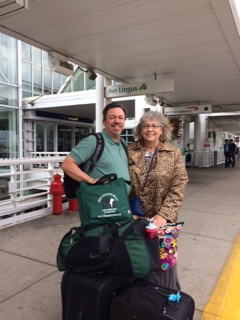
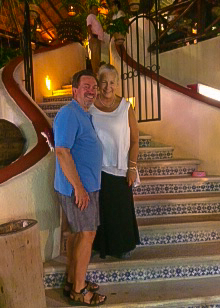
Costa Rica misses the cut

While Costa Rica has a lot going for it, the downsides overshadow the positives for Leslie and me. The land of Pura Vida is no longer on the list of places we’ll consider living. It’s a close call, but we think Mexico is still in the lead.

On the plus side, Costa Rica is a beautiful country. The mountains are lush and green, and there’s an incredible diversity of flora and fauna. We didn’t get to see much of it because we didn’t do any of the touristy things, such as jungle treks and zip lines. Areas like the Central Valley and Lake Arenal have a nice climate with warm days and cool nights. The humidity in those places is relatively low. Beach towns are definitely out. Too hot, too humid.

There are a number of things we like about Costa Rica in general. It’s a politically stable country that just elected, by a fairly large margin, a center-left president who has great plans for his country. There has been no standing army since 1948, the 90 percent literacy rate is one of the highest in the world, there’s a growing middle class, and Costa Rica takes care of the environment. For example, almost 100 percent of the electricity generated in Costa Rica comes from five renewable sources: hydropower, wind, geothermal, biomass and solar.

But electricity is expensive, and the overall cost of living is only slightly lower than in the U.S., In some cases it’s on a par with North American and European countries. We’re looking for a place where our money goes a little farther.

Other downsides include:

  • There are no street addresses. We talked with a Canadian who rents a box at the post office to get mail. If he knows a package is coming, he calls the UPS or DHL delivery driver to meet them somewhere. Crazy.
  • And you get directions that assume you know where you are: “We’re 200 meters south of Pops Ice Cream.” Thanks — now where the heck is Pops?!?!
  • Even the highways are not very well marked. We used Waze and Google Maps on our two trips around the country and still got lost in places.
  • Driving is hideous. In cities and towns, you have to avoid hitting pedestrians and cyclists who just dart into traffic. In rural hilly areas, the twists and turns force me to slow down while the locals just barrel ahead. We saw several near-accidents from drivers passing against a double-yellow line.

Finally, we just don’t have good feelings for Costa Rica like we have for Spain and Mexico. The people are friendly, and there are a lot of ex-pats in the area to socialize with. But neither of us has developed warm fuzzies for this country.

So Costa Rica is off the list as a place to retire. But we would like to come back someday as tourists to do some of those things we passed on while we were here. Also, Horizon Church — the nondenominational we’ve been attending in Jacó — is building a new church. The walls are up already and the plans look terrific. We would love to see it after they have moved in, and reconnect with our new friends there.

IMG_2128
Our last look at Costa Rica — a Pacific sunset. Hasta luego!

Now we’re taking a short break to celebrate our 25th wedding anniversary, which was back on Feb. 6. Has it really been 25 years? Doesn’t seem like it. We are marking this auspicious occasion by taking a two-week cruise from Fort Lauderdale to Rome. While Italy is not really on our list of places to live in retirement, we’re taking this opportunity to visit Naples, Rome and Florence to see the historical sites and museums — places like Pompeii and Herculaneum, and the coliseum in Rome.

After Italy, we’ll move on to France, the last place (maybe) on our list of possible places to live. We’ve rented an apartment in the historic center of Montpelier, capital of the Languedoc-Roussillon area, for six weeks. Leslie is looking forward to finding a French cooking class, and I relish the idea of sipping cafe au lait at little French bistros.

We’ll be back in Chicago’s western suburbs by July 12. Then we have a decision to make.

Next post will be from the middle of the Atlantic Ocean — IF we have decent wi-fi on the ship!

Ciao!
 

Livin’ in the land of ‘Pura Vida’

Leslie and I finally made it to Costa Rica last week. This is a beautiful country, with a number of national parks and wildlife preserves. The national motto is, Pura Vida, which means “pure life,” or “simple life.” It’s more than just a saying or a greeting, it’s a way of life. This site gives you a brief explanation.

We’re living in the beach town of Jacó (ha-KOH) on the central Pacific coast. It’s a fairly small town, geared to touristas, very much like Playa del Carmen was in Mexico. It’s hot and humid, so we would probably not choose it as a place to live in retirement. But we rented a car so we could get to other parts of Costa Rica. Our original plan was to spend all of February in Atenas (ah-TAY-nahs), which is at about 2,000 feet elevation in the Central Valley. A long-weekend trip there, where the climate is probably more amenable, is in the works.

Driving in Jacó, and in most of Costa Rica, is difficult. There are a ton of bicycles on the road, some of which are motorized. Plus, pedestrians  like to cross the street pretty much anywhere they like, since there are few actual street corners. Looking for a parking place is also a challenge. On our first full day here, we were searching like crazy for a particular restaurant that was highly rated on Trip Advisor. Couldn’t find the restaurant OR a parking place.

When I finally spotted a place to park, I was so hungry and frustrated I just dragged Leslie into the first place that looked like there was food available — a hole in the wall. Well, actually there were no walls. Just some tables and chairs and a bar. Fortunately, we had stumbled onto a traditional Costa Rican soda. This was our first taste of Costa Rican food. We both ordered casado, which is a plate with salad, rice and beans, fried plantain, and choice of meats (chicken, beef, pork or fish). Nothing fancy, but it all tasted great!

One rather challenging thing about Costa Rica is that they do not have addresses or street signs. For example, here’s the “address” for the church we attended Sunday, right from their website: “Horizon Church is located 200 meters south of Pops Road on the Costanera (main highway) in front of Auto Tica.” Now, Pops Road is NOT the actual street name, and it is NOT marked — you have to know that it’s the road that runs past Helados Pops, or Pops Ice Cream Shop. See? Challenging. 

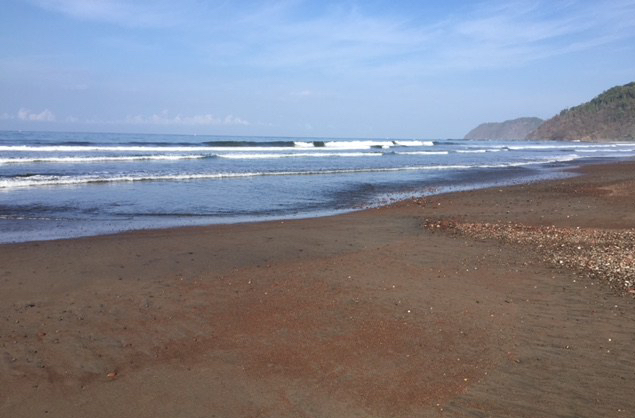
More on Costa Rica once we’ve seen a bit more of it! I’ll leave you with a shot of the beach I jogged on this morning.

Pura Vida!

IMG_2119
The volcanic-black-sand beach north of Jaco. Big waves. Lots of surfing farther south.


Surprise! We’re back to Plan A.

You may recall that Leslie and I originally planned to go from San Diego to Costa Rica, but those plans changed because of scheduling issues. So we decided to take a cruise through the Panama Canal instead. A great way to celebrate our 25th anniversary, we thought. Well, we’re back to Plan A again!

It’s a long story — here’s the short version. The company we were working with to book the Panama Canal cruise failed miserably, so we called on USAA* for help. They quickly verified that canal cruises in the time frame we wanted were sold out. After some discussion about our options, they booked us on a repositioning cruise from Fort Lauderdale to Rome in mid-April. So we return to Europe in spring when temperatures are milder than in February!

That, in turn, caused us to take another look at Costa Rica, and we found what appears to be a good place — under budget — in the Central Valley town of Atenas (ah-TAY-nas). The plan is to be there for about five weeks, then head to a Pacific coast beach town for another five. Still working on the beach town. More on that in the next post.

The 14-night transatlantic cruise takes us from Fort Lauderdale to Civitavecchia, the port city of Rome, with stops in Tenerife, Canary Islands (Spain); Malaga, Cartagena and Barcelona, Spain; and Ajaccio, Corsica (France).

While we’re presently not sold on Italy as a place for us to live — at least not right now — Leslie and I would like to check it out and do some touristy stuff, like we did in Scotland and England when we started this journey in 2016. So the plan is to spend two or three weeks in various parts of Italy and then head to France for about six weeks, probably in Languedoc-Roussillon in southern France, or maybe in Provence. Details to come.

If all goes well, we will be back in the Chicago area in late July to see our doctors, catch up with friends and family, and make a decision on a retirement location. By the end of this year, we hope to be vagabonds no more!

Looking back at the last post, I’m afraid it may have left you with the impression that we don’t like San Diego. We love San Diego, but our focus is to live in another country. Plus, the cost of living in southern California is quite high, so things will have to change dramatically for us to retire here.

IMG_2033
Lots of Navy people attend this church. The design of the sanctuary is that of an old sailing vessel, upside down. The roof is the ship’s keel. 

There are lots of great things about San Diego, though. One of them is not even in San Diego — it’s St. Paul’s United Methodist Church, the “Church of the Voyager,” on Coronado Island. We’ve made some good friends at St. Paul’s and have learned a lot from Pastor Robb’s sermons, like his current thought-provoking series on the Gospel of John. Anytime we’re back in San Diego, we will return to St. Paul’s.

I’ll close with this: Stephanie’s Christmas gift to us was tickets to the musical “Hamilton”! All three of us went on Thursday, Jan. 11, to the San Diego Civic Theatre. Wow! This is the best show I’ve seen since “Les Miserables,” which is my all-time favorite. The music, the staging, the singing, the dancing — all just incredible. I’ll admit I was prepared not to like it because I’d heard some of it was in rap. But the rapping was like the recitative, or spoken words, in opera. It worked really well. I highly recommend “Hamilton.” Go see this one, it’s definitely worth the price!

The music is the real star: songs like My Shot, The Room Where it Happens, and Washington On Your Side, just to name a few. They’re not tunes you can hum while walking down the street, though. They are rich and complex, like fine wine. One of the most impressive things about this musical came after the last notes died away. The entire cast took a bow together. Curtain calls didn’t start with the minor characters and end up with the stars getting the most applause. No. The cast appeared at the end as equals, no matter what role they had. It made me think about Mr. Jefferson’s eloquent words, “…all men are created equal.” Too bad we have drifted so far away from that idea.

IMG_2038
The Civic Theatre is an excellent venue. Decent seats and good sight lines, even from the upper balcony. We could see the dance moves well from up above.


*We use San Antonio-based USAA (United Services Automobile Association) for car and home insurance, life insurance (Mike), banking and investments. In fact, I’ve never had any other brand of car insurance — over 45 years with the same company. The bank and investment services are available to anybody, but the insurance is sold only to current and former military officers and certain non-commissioned officers. The company offers many additional services to members, including a car buying service and a travel agency. If you ever served in the military, go to their website to see if you qualify to become a USAA member. And no, they didn’t pay me for this advertisement!

Exploring Lakeside

birthday-1894
Many thanks to those of you who wished Leslie a happy birthday (Oct. 16) on her Facebook page. Here, we’re celebrating at Ajijic Tango, an Argentine restaurant in the centro. Perfectly done steaks and great chimichurri!

I know it’s been awhile since the last post. Leslie and I have learned a lot about Lakeside recently. For example, there’s a lot to do here! You can be as busy or sedate as you like. We’ve been busy.

We made “history” recently. We rented a car, which is something we have not done except for the brief time we were in Illinois over the summer, but that doesn’t count.

Why a car? Ajijic centro is walkable but there’s a lot more to Lakeside than the centro, and some things require a car or a generous friend with a car. For example, we’ve been attending St.Andrew’s Anglican Church in the Riberas del Pilar neighborhood of San Antonio Tlayacapan (tuhlay-ah-kah-PAN). On our first visit we took a taxi there and got a ride home from our Canadian friend Libby, who lives right around the corner from us. She graciously picked us up the next week. But she did not plan to attend the following Sunday, so we had to make other arrangements. Also, the Tuesday organic market is a few miles west on the carretera, or main road. We took a taxi one week and managed to catch a bus back, but it took longer than expected and we missed an event at The Lake Chapala Society that we had planned to attend.

Taxis are less than dependable here in Ajijic. You cannot hail a cab as you can in most other Mexican cities in which we’ve lived. Here you must call or go to the sito (taxi stand) in Ajijic Plaza. We could use the buses. They’re only eight pesos per person and fairly dependable. But not all bus stops are clearly marked, and you often have to wait 15 to 20 minutes for a bus.

IMG_1912
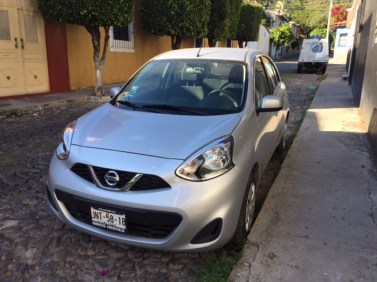
It’s not a Cadillac, but it’s kind of fun to drive.

And there’s a lot to see outside of Ajijic, like Chapala and Jocotepec (ho-KOH-teh-peck), for example. You need a car to reach those towns, or to get to Costco in Guadalajara. So we got a little Nissan March for a couple of weeks.

One of the first things we did with our new wheels was to take a Saturday drive east to the town of Chapala, which is the largest Lakeside town and the seat of government for the Municipality of Chapala. It’s like a county or a township in the U.S. The Chapala municipality includes Chapala, Ajijic, San Antonio Tlayacapan and smaller towns, but not Jocotepec, the westernmost Lakeside town.

malecon-1880
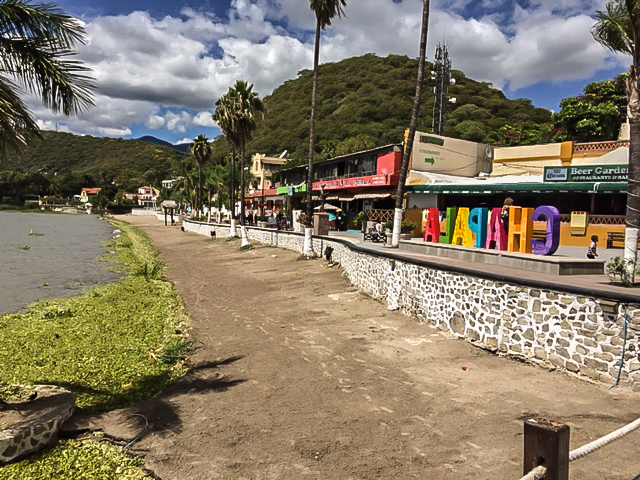
Part of Chapala’s malecon, with restaurants and shops. The green stuff at the water’s edge is called liria, and it’s not good for the lake.

Chapala has more than 21,000 residents. Its malecon, or boardwalk, is longer and more commercial than Ajijic’s malecon, which is mostly a park. There’s a pier and a restaurant or two — that’s about it. It’s a quiet place to jog in the morning, or to walk your dog. In Chapala, though, we saw lots of vendors selling food and other items (ice cream!), and there were a number of hotels and restaurants with nice lake views. There are also small boats you can hire to take you out into the lake to visit one of the small islands.

Leslie and I were excited to see sailboats on the water at Chapala. The only watercraft near Ajijic are small fishing boats and kayaks. Leslie, who grew up in Tower Lakes just north of Barrington, Ill., remembers lots of Sunfish and Butterflies on a dramatically smaller lake. So it was good to see sails. A few days ago we learned why the sailboats steer clear of our end of the lake — it’s too shallow. The lake is deeper east of the town of Chapala.

chapala-1876
This statue of Christ as a fisherman, “Jesus Pescador,” is just off the Chapala malecon. It looks back toward the town.

This fact, and many more, came out of a program at The Lake Chapala Society called “Introduction to Lakeside.” Our leader was Rachel, who is Australian but came here from Canada seven years ago. She speaks Canadian with an Australian accent! Here are some other tidbits:

  • Mexicans celebrate a number of religious festivals, most of which involve fireworks at odd times, like in the middle of the night. The message: If late-night/early-morning noise is a problem for you, find a house that’s nowhere close to any local churches!
  • Health care in Mexico is highly rated — as good as, or better than, the U.S.  Most Mexican docs graduated from the University of Guadalajara Medical School, which is affiliated with Johns Hopkins. Not too shabby.
  • The total population of Lakeside (from Chapala west to Jocotepec) is about 110,000.

Speaking of health care, we got yet another chance to experience health care in Mexico, and it is very good. Leslie’s eyes were irritated and the problem wasn’t responding to normal home treatment. She saw Dr. Rios, an ophthalmologist who said the problem was environmental — there are a lot of allergens floating around right now. He gave her two medications and will do a follow-up just before we leave town. The exam was 700 pesos — about $36 USD. That’s not the co-pay or deductible. That’s the total cost of the exam. We paid another 1,000 pesos (about $52 USD) for two medications, and that’s less than if we had gone to a farmacia. She’s already improving.

And it’s not just people health care. Last weekend, we had to take one of “our” cats, Doris Day, to the vet because she also appeared to have an eye infection. Total bill was 460 pesos — 150 for the examination and 310 pesos for eye drops. That’s less than $25 USD total,  and the exam itself was less than $10 USD.

Sunday, we spent a terrific afternoon with Dale and Don, new friends from St. Andrew’s. They have a beautiful home with great views in the Puerta Arroyo subdivision on the western edge of Ajijic. Dale showed us some other houses in their neighborhood, including one under construction, then took us on a tour of other subdivisions she thinks we might consider renting if we come here permanently.

Are we leaning closer to Lakeside as our “permanent” home? Maybe.

Next time: Cost of living.

Hasta luego!

church-1886
Inside the parroquia, the main church in downtown Chapala. We just missed a wedding!
church window-1888
In Chapala’s parroquia , we noticed circular windows that can be opened and closed by pulling on a rope, which hangs down just to the right of the pillar. See it?

It’s halftime! Sorry, no marching band.

Leslie and I have been back in the States for two weeks. We are officially halfway through our search for an overseas home in retirement. This time next year, we’ll be making a choice — or at least narrowing it down to two finalists, which we will then try out for at least six months each. There could be a third year of this escapade.

We’ve enjoyed seeing friends and family, going to our church and visiting some of our old haunts. We’ve already been to our favorite farmers market on Saturday morning in Downers Grove, and we’ve dined at a couple of our favorite restaurants. We’ve even gotten a few physician appointments done. Okay, Leslie has done that. I’ll get to it soon.

IMG_1775
Met our friend Lini at the Tap House Grill in Des Plaines. We tried to catch up, but it’s going to take a few more long lunches!

One common question is whether we’re experiencing culture shock after being in Europe and Mexico for almost 10 months. Well, yeah! We’ve been living in places where we could walk or take public transportation (along with taxis and Ubers) for almost everything we needed. Here in the western suburbs of Chicago, things are spread out. We have to drive everywhere.

So we tried to rent an “intermediate” size car, thinking we would need a little more room than the smallest thing available. Imagine our surprise when they upgraded us to a Cadillac XTS! It’s got more bells and whistles than Leslie’s former car, an Acura RDX.

IMG_1783
Leslie says the trunk is big enough to hold three bodies! We just need to haul a few boxes.

The last time either of us drove a car was back in September when we turned in the RDX. Seems we’re both still able to drive on U.S. streets and highways. I guess it’s just like falling off a bicycle.

And it’s nice to see green trees and green grass again. We’re also thoroughly enjoying cooler temperatures and lower humidities. Summer is great in Chicagoland. It’s just those winters that make us want to live somewhere else.

Finally, we traded in our worn Jake’s Country Meats bag for a new one. For many years, Leslie and I have bought pork from Nate and Lou Ann Robinson (owners of Jake’s Country Meats and seventh-generation pig farmers in Cassopolis, Mich.) at the Downers Grove farmers market and throughout the winter, too.

img_0903
Remember this from October 2016? The Jake’s bag served us well in the past 10 months.

As we began our vagabond journey last October, Leslie used our insulated Jake’s bag — which we formerly used to take our farmers market produce home — as the carrier for prescription meds and medical supplies. The bag made it easy to keep some medications cool, and it kept all our meds in one place. That’s good organization, but it also helps in security lines at airports. Plus, we’ve advertised for Jake’s Country Meats in six different countries  — seven if you count Scotland as a country, which it may be very soon.

But over the past 10 months, the Jake’s bag has suffered from over-use. It has been through 12 international airports and seven train stations as we made our way from O’Hare to Dublin to the U.K., through France to Spain, to Malta, to four cities in Mexico and back to Chicago. Leslie has repaired it with duct tape more than once and it has remained serviceable. But today, Nate presented us with a brand-new insulated Jake’s bag. Of course, we promptly used it for breakfast sausages, bratwurst and pork tenderloin! Nate raises pigs the way his grandfather, and his great-grandfather, did. We’ve been buying pork and other meats in grocery stores and meat markets, but have not found anything as good as what Nate sells.

Our friends Linda and Bill are putting us up for a few weeks at their beautiful home in Glen Ellyn, and last week Leslie introduced them to Nate and Lou Ann’s outstanding pork products. She cooked some smoked pork chops, which were a huge hit. This morning, Linda joined us at the farmers market to meet Nate, and once the bag replacement ceremony was over she decided she wanted our old bag, which Nate was just going to throw away. I always say recycling is better!

IMG_1779
Nate presents a new Jake’s bag to Leslie while Linda signs up for the Jake’s newsletter as Nate’s newest customer. See the duct tape on the old bag?

We have a lot of work to do before Year Two begins in September, and we need to connect with lots of folks while we’re in Chicagoland. Some of you have already heard from us regarding when and where to meet for lunch, dinner or drinks. If we haven’t gotten in touch yet, we will soon!


Playa del Carmen: For a vacation maybe, but not long-term

Leslie and I love the beach. Since we moved to Chicago’s western suburbs late in 2000, most of our vacations have been on Caribbean islands. In February. It helped us survive Chicago winters.  So it seemed natural that a place like Playa del Carmen, right on the Caribbean Sea, would be a strong candidate to be our new home. Wrong. We would love to come back here for a vacation, but living here permanently is out.

There are some positives. Let’s look at those first:

  • It’s a small city, only about 150,000 people, and relatively walkable if you live between the beach and Highway 307.
  • There’s a lot to do here. Playa is a major tourist destination, so you can visit Mayan ruins, swim in cenotes and go to water-related theme parks on the Mayan Riviera. Oh, and there’s the beach. We will miss our wait-person Luis at Kool Beach Club. He tried to teach us some Spanish: “Estamos bien, por ahora.” (We’re good, for now.)
  • Excellent restaurants, and not just in the tourist areas. And not just Mexican food, either. We had terrific gazpacho and paella last night at Mar de Olivo.
  • Good public transportation, especially the vans they call colectivos, which will get you around town and to other cities on the Mayan Riviera. Lots of taxis available, too.
avocado-1770
One great thing about living in Mexico: BIG avocados, some of the best we’ve ever had. Less than $2 USD for a pound.

But the negatives are strong:

  • We’re looking for warm temperatures and Playa has that. But the humidity is 80 to 90 percent or more. We’re tired of sweating constantly when outside. The deodorant works, the antiperspirant does not. It wasn’t so bad when we were here seven years ago in December but again, we’re looking for a year-round home.
  • We’ve been unable to find an English-speaking church. In three other Mexican cities, we have thoroughly enjoyed attending Anglican church services weekly and meeting some terrific people.
  • As a consequence, we’ve been unable to meet other expats. There doesn’t seem to be any organized group here as there were in San Miguel de Allende and Puerto Vallarta, and to a lesser extent in Mérida.
  • We’ve also been unable to find any cultural events, such as concerts or lectures we might want to attend. This town appeals to a younger, hipper crowd. One of the biggest annual events is the DJ Festival at Mamita’s Beach.
  • Playa is a big-time tourist trap. We gringos cannot walk peacefully down Fifth Avenue. We are assaulted by people selling tours, fishing trips, diving trips, cenote trips, tacky souvenirs, Cuban cigars and lots of other stuff. “Vivimos aqui, amigo,” (We live here, buddy) usually works, but it’s easier just to avoid the street.
  • And as mentioned in a previous post, it seems most of the housing is vacation rentals rather than traditional Mexican homes for more permanent residents. Prices seem a little on the high side.
  • Did I mention the humidity?

So we’ve learned that the Yucatan Peninsula is not for us. Great for vacations, but not more.

tierra-96
Madre Tierra is one of the few restaurants we remember from our Christmas vacation seven years ago. I enjoyed one of the best steaks I’ve had in years.

We’ve been on the road for nine months now. Time to take a break and head back to the U.S. to take care of things that need our attention and to see friends and family. Our flight from Cancún lands at O’Hare tomorrow afternoon (Saturday, July 15). We will be in the area until the end of August and possibly for the first week or two in September.

What happens after that? You may recall from a previous post that Leslie and I visited the Lake Chapala area for a few days at the end of March to reconnect with an old friend from Texas. At the time, I said this deserved a closer look. So we’ve secured a two-bedroom house in Ajijic for mid-September through the end of October.

Ajijic is similar to San Miguel — high altitude (5,000+ feet), warm days, cool nights, low humidity. The expats who live there say it’s the best climate in the world. And we really liked their downtown weekly farmers market. It will be our fifth, and probably final, Mexican home. Leslie wants to try Ensenada in the northern part of Baja California. I think it’s too close to the border, which is where a lot of the drug cartel activity is. We’ll see.

After that, we’ll be in San Diego for November and December. That lets us spend the holidays with our daughter Stephanie, and it gives us an opportunity to see what it would be like to live there. It is possible, after all, that someday we would want to be closer to her. Knowing, however, that moving in with her for two months would be nearly impossible, we have secured an East Village condo about three blocks from her place.

As 2018 begins, we plan to check out a couple of highly recommended towns in Costa Rica’s Central Valley, and then do another three months in Europe — France and Italy are on the agenda, but we may also try another city in Spain. This time next year, it will be decision time. Where will our new home be? Vegas oddsmakers are already hard at work!

Next post from the U.S.


Playa is a little different, seven years later

Leslie and I spent Christmas 2010 with daughter Stephanie in Playa del Carmen. In fact, this is the only place in our travels so far that we have actually been to before. Back then, we rented a two-bedroom condo near the beach for about a week, spent nearly every day at Kool Beach Club and sampled some excellent restaurants. We’re back, almost seven years later, and a lot has changed.

IMG_1673
Pedestrian-friendly Fifth Avenue is Playa’s top draw.

Quinta Avenida (Fifth Avenue) is still the hot spot in Playa but it seems busier now, with even more opportunities for tourists to spend their money.

On our first stroll down that famous pedestrian-only  street, we were attacked by at least a dozen vendors who aggressively tried to sell us something, thinking we were tourists. Easy assumption to make, I suppose.

I saw one or two restaurants that looked vaguely familiar. Otherwise, big changes. The little wine bar the three of us enjoyed more than once in 2010 — gone. The Mayan-themed restaurant where I got some great cochinita pibil (a traditional Yucatecan pork dish) — it’s Guy Fieri’s Restaurant now. I guess that’s called progress.

We got in last Saturday, unpacked and got settled, then decided to revisit Kool Beach Club on Monday. I remember it as being a place with great food and drinks, and a DJ that played techno-beat electronic junk music that annoyed me.

kool-
Back at Kool Beach Club!

Until I caught my toes tapping to the beat. Then I heard the overlay change — something dropped in and something else dropped out. The music was changing, evolving, interesting to listen to. But the beat was the same. Hard. Driving. Constant. Not annoying anymore — fascinating. Didn’t read much in my book after that.

Well, the beach has changed. The music isn’t nearly as good, and a couple of new condo-hotels have been built, making the beach more crowded. The food is still great at Kool Beach Club. We had some terrific fish tacos Monday and will probably return several times over the next month.

Changes are not limited to the beach and Fifth Avenue. Playa del Carmen (pop. about 150,000) isn’t laid back anymore. It looks like they’ve built condo buildings all over the place in the last few years, especially between the beach and Avenida 30, a major thoroughfare.

IMG_1677
New condos along Calle 34, near our condo.

In 2010, PDC was centered on Fifth Avenue establishments catering to the tourist trade. Not anymore. There are restaurants and boutique hotels along 1st Avenue, 10th Avenue and all along the calles in between (avenidas, or avenues, go north-south while calles, or streets, run east-west).

One big downside to Playa is the lack of an English-speaking Protestant church. We loved St. Paul’s Anglican Church in San Miguel de Allende, as well as St. Mark’s Anglican Church in Mérida. Christ Church by the Sea in Puerto Vallarta (also Anglican) was OK, too. Unfortunately, that denomination apparently has no presence in Playa del Carmen, or anywhere in the state of Quintana Roo. There are non-denominational churches in neighboring cities like Tulum (about an hour south) and Puerto Morelos (about 30 minutes north) but nothing in PDC that might meet our needs.

Same with expat groups. Leslie found three groups on Facebook, but all appear to be geared toward real estate. We haven’t connected with any other expats yet.

We’ll be here in Playa until July 15. That should give us time to experience this little beach town and visit other possible retirement locations, such as Bacalar (on a lake near the border with Belize) and Tulum.

IMG_1676
We’re in a modern two-bedroom condo across the street from PDC’s major sports complex, where I join the locals to go jogging around the cinder track every morning. 

As for the weather, it’s hot and humid — really humid. But temps here are in the upper 80s F. instead of the upper 90s as they were in Mérida. Humidity, though is consistently high, so we start sweating when we walk out the door. Nice breeze at the beach, though.

More next time!

IMG_1674
The pool in Aqua Terra, our home for the next month. Not as private as our digs in Merida, but it’s nice. And the big saltwater “pool” is just a few blocks away!


Moving on; one stop left in Phase I

We’re at the end of our six weeks in Mérida. Tomorrow, Leslie and I hop on a bus and travel to the beach city of Playa del Carmen. We’re looking forward to slightly cooler temperatures and a more walkable town.

Mérida, capital of the state of Yucatan, is an interesting city.

chair-1670
Merida’s many parks feature these “conversation chairs,” also called “Las Sillas Confidantes,” or  “Tu y Yo,” or “De Los Enamorados.” This young couple shows the original purpose.

There are some good things about it:

  • While there are lots of expats here (fewer in May when it’s so hot), the percentage is smaller than in the other cities we’ve been to so you don’t often run into other Americans or Canadians on the street.
  • The cost of living seems a bit lower here, especially for food at the local mercados and for real estate.
  • There’s no beach in Mérida but in 20 to 30 minutes you can be on the tip of the peninsula and enjoy neat little beach towns like Progreso.
  • Orquestra Sinfónica de Yucatán performs in a very nice concert hall. They’re pretty good, too. And there are classical music performances every Sunday at a smaller auditorium on the other side of the park. Last week we saw the chamber orchestra Orquestra de Cámara de Mérida do seven Vivaldi works. A free concert!
  • St. Luke’s Anglican Church has warm, helpful people and an energetic priest who gives insightful sermons. Sunday (June 4), we helped inaugurate the new church building just five blocks from our house.
Cathedral-1655
Merida’s cathedral, completed in 1598. It was the first Roman Catholic cathedral on the American mainland. This cathedral and the one in Santo Domingo (Dominican Republic) were the only American cathedrals built entirely during the 16th century.

Never say “never,” but Leslie and I agree Mérida won’t make our final list. Here’s why, in a nutshell:

  • I never thought we would say a place is “too hot,” but Mérida is too hot. And too humid. Maybe it would be perfect in January, but we’re looking for a year-round home.
  • This is a city of almost a million people. It’s big and spread out, and outside the centro it’s not very “Mexican.” We liked the smaller towns better.
  • Being a big city, of course, means it’s not very walkable, and walkability is a big asset.
  • Transportation back to the States is not simple. When I looked for ways to get back quickly for a funeral, the only options were to fly to Mexico City and catch a flight north, or take a bus or private car to Cancún and hop on a direct flight to Chicago or  another U.S. city. Connections are not the best.
  • Did I say it was too hot?

So it’s on to the final Mexican stop on this part of our journey — Playa del Carmen in the state of Quintana Roo, about 30 miles south of Cancún. I’ll leave you with some photos of the places we’ve visited here and the things we’ve seen — pics that haven’t made it into any previous post.

Next post from Playa!

IMG_1815
We visited Hacienda Sotuta de Peon, where henequen (sisal) is grown and made into fibers that are used to make rope, carpets and burlap bags. It’s the only henequen hacienda still operating. At one time, the Peon family alone owned 14 henequen plantations in the Yucatan. Our guide Jose (left) and one of the workers showed us how rope was made by hand, using this simple machine. We saw every step of the fiber-making process. Now, they only produce the fiber as a working museum for tourists and for use on the plantation, and the plantation is dramatically smaller than in the early 1900s during the “green gold” boom.
IMG_1851
Henequen fibers come from a type of agave plant. Yes, agave is used to make tequila. Different kind of agave. At the end of our tour, though, I had a margarita made with henequen liquor rather than the normal agave tequila. It was OK, but not great. Once a plant is started, it’s seven years before any of the fronds can be harvested. Then you can only harvest seven fronds per month.
lr-1869
Hacienda Sotuta de Peon has one of the Yucatan’s many cenotes. We enjoyed about an hour swimming here, and there were no crowds. Leslie enjoyed floating in the crystal-clear water. This cenote is in a cave.
IMG_1775
Uxmal (OOSH-moll), an ancient Mayan site dating to 700 A.D. The temple is to the right, and palaces to the left where priests, scribes and other professionals lived and worked. Lower class Maya lived in villages outside the temple grounds. This site was apparently abandoned around the 10th century.
kabah-1789
Mayan figures at Kabah, a smaller site near Uxmal. 


A small bump in the road, but a nice new home for us

CORRECTION: In the last post I said my paternal grandparents had eight children who lived to adulthood. It was seven. My sister corrected me. Thank you, Linda. I must’ve counted a favorite aunt twice!

We’ve had some issues this week, so it’s taken awhile to do a new post. Sorry about the delay. Leslie had been experiencing back pain that kept getting worse, and we both thought it was the extra-hard bed in Casa Walker, where we were living. A visit to an emergency room doctor confirmed that, so we found a new place. For the next three weeks, we are living in Casa San Antonio. We’re still in the same neighborhood and even a little closer to the Santiago mercado. The owners, a retired physician and his wife, are from San Antonio, Texas, where Leslie and I used to live. They are actually there right now! Smart. It’s only 75° F. in San Antonio today. Here, it’s 100° F. with a “feels like” of 107°!

So we had yet another encounter with medicine in Mexico, with a similar outcome to the one we had in San Miguel de Allende. The woman doctor spoke moderately fair English but Leslie understands a good bit of Spanish and there’s always Google Translate, so they had no trouble communicating. You probably know how much an ER visit costs in the States. Many hospitals in the U.S. want your insurance information before they even figure out whether you’re dying or not! At Clinica Mérida, they just asked if we were going to pay cash or with a credit card. Easy answer. We put all medical expenses on our USAA Federal Savings Bank card so we can more easily track medical expenditures for tax purposes. I think we were out of there in less than an hour with a diagnosis and prescriptions. Total bill: $340 pesos. That’s less than $20 USD. Even better, Leslie’s back is much better now.

Leslie and I have been attending church at St. Luke’s Anglican Mission. It’s a bit smaller than the Anglican churches we attended in San Miguel and Puerto Vallarta.

IMG_1629
St.Luke’s meets in the family chapel of a private home in Merida’s La Ermita area. On the first Sunday in June, they will move to new digs closer to us.

Last week there were six in worship. Yesterday, we had a total of eight. Father José, a native of the Azores (Spain) who has spent considerable time in Canada and the U.S., does a service in English at 10 a.m. and in Spanish at 11:15 a.m. The Spanish service is considerably larger. Even with a tiny congregation, this church does outreach work. On Saturday, Leslie joined a group (English- and Spanish-speakers) that meets weekly to make pulled pork sandwiches. Those sandwiches are distributed Sundays to poor people who tend to gather at one of the local hospitals.

IMG_1630
Father Jose uses a tortilla instead of bread for communion. Isn’t that appropriate?

Before getting sidetracked by the need to relocate, we went to the Gran Museo del Mundo Maya de Mérida, an impressive collection of Mayan culture and history. Much of the first section is devoted to how a meteor strike in the Yucatan Peninsula millions of years ago created cenotes that the Maya believed to be sacred. There was also a lot of recent Mayan history, including how the Spaniards brought Catholicism and how descendants of the Maya are contributing to Mexican society today. As we walked through, I thought, “This is not what I was expecting.” I started to think this place was a bust. Then we turned a corner, and there was a statue of Chaac Mool, the Mayan rain god. “OK,” I thought. “Here’s where the real stuff starts.” We saw works by pre-Colombian Mayan craftsmen and artisans, and enjoyed some excellent interactive exhibits. What’s really cool is that the majority of the signage in this impressive modern building is in Spanish, English and Mayan — Yucatec Mayan to be more specific.

Chilam Balam 2
 On the ceiling of the museum is a Mayan calendar (we think), a drawing from the Chilam Balam of Ixil, which a wall plaque describes as “an example of the persistence and power of Mayan memory.” Written in the 17th and 18th centuries, these books preserved important traditional knowledge in which indigenous Maya and early Spanish traditions coalesced. But they also contained material that is clearly pre-conquest.

Then we spent a day at the beach in nearby Progreso. Mérida is about 30 miles inland from the Gulf of Mexico. If you want to go to a beach, though, just wait along Calle 64 in the Centro and watch for a bus that says “Progreso Directo.” Flag that bus down (there’s one at least every 20 or 30 minutes), just like you would hail a taxi in downtown Chicago, and for $40 pesos (a little more than two dollars), two people can spend a day at the beach. Of course, it’s $40 pesos more to come back!

Not the greatest beach we’ve ever seen, but we appreciated the cooling breezes. There were lots of locals on the beach on a Monday, most with small children. It was fun to watch them playing in the gentle surf. Seaweed had washed up along the length of the beach, and that wasn’t very nice. But we remembered that, “A bad day at the beach is better than the best day at work.”

Some of the restaurants along Progreso’s malecon (boardwalk, or esplanade) have beach chairs with umbrellas and bar service. We found one of those and staked out a spot, ordering some bottles of water and a few drinks. But their lunch menu was not inspiring, so we found a restaurant just a few steps down the beach that gets high marks on Trip Advisor: Crabster. I had some fantastic shrimp tacos and Leslie enjoyed coconut-almond shrimp that was crunchy and very tasty. And we enjoyed the whole meal with our toes in the sand.

In the next post, I hope to provide some cost of living details. Here’s a teaser: We had lunch several days ago at our new favorite place in the Colonia Santiago. It’s called Maize, Canela y Cilantro — a very small, very cozy, breakfast and lunch place. We had soup, entree with small salad and rice, warm corn tortillas, black beans, amazing salsa, and four glasses of jamaica (hibiscus) tea. Total bill with a healthy tip was $270 pesos. That’s a big lunch for two for less than $15 USD.

IMG_1615
A closing shot. You see this all over Merida — people saving parking spaces, just like in Chicago when it snows. Except, there’s no snow here.

Mérida is hot!

A little too hot, actually. It’s 2:30 p.m. in the afternoon and the heat index is 104° F. Good thing we both bought some new warm-weather clothing in Puerto Vallarta!

Before I tell you about this new place, please allow me a brief personal aside on the end of an era. My aunt Sue Rownd died Tuesday, May 2, in Little Rock, Ark. She was 96. Aunt Sue was my dad’s second-youngest sister. My grandparents, James Claude Rogers and Janie Teeter Rogers, had eight children (if I recall correctly) who lived to adulthood. Today, they and their spouses are gone. Aunt Sue was the last of her generation.

I learned only in the last few years that Aunt Sue was a writer, and she had done quite a bit of writing over the past few years. She was, in fact, the first female editor of the Weevil Outlet, student newspaper at Arkansas A&M College (now the University of Arkansas at Monticello). That was in 1941. I am proud to say she was a fan of this blog and sometimes emailed me with comments that I always appreciated. She had a great run. My sympathies go to my cousins Ed, Carolyn and Judy. I wish I could get back to the U.S. for her funeral, but there are some logistical issues. Unfortunately, I can’t resolve those issues to get there in time.

Thanks for your patience.

Mérida, capital of the Mexican state of Yucatan, is incredibly hot and humid. And it’s big — almost a million people live here. It’s on the western side of the tip of the Yucatan Peninsula, but inland — about 22 miles from the Gulf of Mexico coast. Mérida has the highest percentage of indigenous persons of any large city in Mexico. About 60 percent of its people are of Mayan ancestry, so the conquistadores didn’t wipe out the Mayans  — they’re still here and going strong. In fact, they’re great at marketing. We both bought new hats from them just yesterday!

IMG_1599
No, that’s not a “Panama” hat I’m wearing. It’s a jipi-japa (hippie-hahpah), made by Mayans right here in Merida out of henequen (sisal). And this style of hat comes originally from Ecuador, not Panama. Gringos in Mexico need good hats!

Founded in 1542, Mérida was built on the site of a Mayan city that was a cultural center for centuries. So, Mérida could be the oldest continually occupied city in the Americas (that’s according to Wikipedia, so it might be true). It’s a beautiful colonial city with lots to offer, both here and in nearby places. We’re planning trips to Mayan archeological sites such as Uxmal (oosh-MAHL) and Ek Balam (eck bah-LAHM). Leslie and I learned about Ek Balam yesterday when we visited the Museo Palacio Cantón, also known as the Museo de Antropologia y Historia (Museum of Anthropology and History, but you probably figured that out even if you don’t know Spanish). We also plan to visit some cenotes. I’ll explain more about them when we’ve been to a few.

We’re staying in a 100-year-old house in the Colonia Santiago, which is home to lots of expats. The Mérida English Library is just a few blocks away. We plan to attend a Library-sponsored wine tasting next week. And on Sunday we’ll probably take an Uber (yes, Uber is here in Mérida!) to St. Mark’s Anglican Mission. We hope to meet more expats at church and at the wine tasting.

IMG_1579
Casa Walker, which we are renting from Arnie and Pam White through Airbnb. 

We’ve already been to our local Mercado Santiago, about a 15-minute walk from our house. But we’re looking forward to experiencing the mercado in the centro historico, which they tell us is huge — covers nearly a city block. On Saturday morning, we’re heading to the northern part of the city for the Slow Food Market. That one sounds great!

The house itself is a bit quirky, but it has a nice plunge pool on the patio and a rooftop area with great views of the city.
We’re not right in the centro, but a bus or our friendly Uber driver will get us there fairly quickly, or we can take about a 20- to 30-minute walk. Depends on how hot it is!

IMG_1582
About half the size of our pool in Puerto Vallarta, but it’s great for heat relief!

Part of the quirkiness is that the pool and patio actually separate the living area and kitchen from the two bedrooms. There is a full bath right off the kitchen, and that’s handy. There’s also an outdoor shower in the master bath.

The heat alone might drive Mérida off our list fairly quickly. One chart I saw indicated that, historically, this city has recorded a high temperature of 100° F. or more in every month of the year, including the winter months. But we’ve been here less than a week, so we need to have patience.

More to come after we’ve had opportunities to check out this city and its environs.