The is the final post

This is the end for our blog and it will probably be the worst post you have seen, because I’ve lost my editor. Leslie, my long-time traveling partner and my beautiful wife of 31 years, died Wednesday, March 20, of metastatic endometrial cancer at Vanderbilt University Hospital in Nashville. The cancer came back, and it came back in a big and awful way.

Since returning to our home in Mexico in early January she had been growing stronger, hitting the gym four days a week to walk on a treadmill for 30 minutes. Then around February 20, she developed diarrhea. It got better, then came back. Then she started wheezing and had shortness of breath, as well as pain in the upper right quadrant of her abdomen, mostly after eating.

She was scheduled for her first three-month checkup at Cleveland Clinic in Weston, Florida, during the first week in March, and had several other appointments set up during that week, including with a primary care physician. But that doctor was ill and cancelled Leslie’s Monday appointment, so we went to the emergency room for the symptoms mentioned above as well as a distended belly. Doctors did a CT scan and diagnosed her with pneumonia and a large hematoma on her liver. They were stunningly wrong. And they did absolutely nothing to treat her.

Rather than go home at the end of the week we flew to Nashville, where Leslie planned to have all her future checkups. She saw a nurse practitioner in gynecology/oncology at Vanderbilt-Ingram Cancer Center, part of Vanderbilt University Medical Center. The NP sent Leslie to the ER, where she got another CT scan. This one showed lesions in her abdomen, and the Vanderbilt doctors feared there was a mass on her liver instead of a hematoma. A day later, a PET scan confirmed a large, fast-growing tumor on her liver that was pushing upward on her lung, which caused the wheezing. There was also a buildup of fluid filled with “innumerable” malignant ascites. The doctor said this was like someone had thrown rice into Leslie’s abdomen and each grain was expanding.

Doctors were encouraged by a mutation in the tumor. They hoped immunotherapy might help shrink the tumor and buy Leslie some time. But she never made it to the first infusion. Early that Wednesday morning she slipped away peacefully in her sleep. Stephanie and I were by her side. We are heartbroken. Everything happened so quickly. In just three months, she went from being “in remission” to being a victim of a highly aggressive cancer.

We are grateful for the care Leslie received from the team at Vanderbilt. If you would like to honor Leslie, please feel free to click on this link: https://give.vanderbilthealth.org/give/246900/#!/donation/checkout Under the question “What would you like your donation to support?” please select “Greatest needs at Vanderbilt-Ingram Cancer Center.”

The family held a party for Leslie on Tuesday, March 26, at Stephanie’s home in Nashville. Many of Steph’s friends and co-workers came. We ate food and drank wine. When I told some of Leslie’s friends we were doing that, three of them said, “Yep, that’s Leslie. She would love it.”

According to her wishes, we will be holding a slightly more formal Celebration of Life for Leslie in early May at our home in Ajijic. Our dear friend and retired United Methodist pastor Michelle will officiate.

It’s going to take me a long time to learn how to travel without Leslie by my side — if I’m able to do that. So I am closing out this travel blog. I will leave everything up for the rest of 2024, and if anything exciting happens I will post again. But I believe this is the end. Thank you for following us over the past eight years. Adios!

Leslie’s friends had so many amazing things to say about her. One said, “She lives on in the lives of those she extended herself to in love, ever changed because we knew her.” But everybody said she had the greatest smile! You can see that here.

Traveling again, but this time it’s not for fun

Leslie and I are in Florida. Our plan was to take a cruise from Los Angeles through the Panama Canal, ending in Fort Lauderdale, to celebrate our 30th wedding anniversary this year. The cruise didn’t happen, but here we are.

A little backstory first. In January, Leslie had surgery at a hospital in Guadalajara. It was supposed to be a complete hysterectomy but the doctor only removed her uterus and fallopian tubes. The pathology report showed a very small Stage 1 endometrial cancer, which we did not anticipate. Normally, Stage 1 means no further treatment, just what the doctors call “watchful waiting.” But because of the way in which the uterus was removed and the fact that other organs remained in place, the consulting oncologists recommended aggressive radiation therapy.

Leslie wasn’t happy with that. She wanted the job finished and done right. After a few months of trying to resolve the situation, she had surgery May 15 at the Cleveland Clinic in Weston, Florida, to finish what the Mexican doctor failed to complete. Her second surgery went very well. However, pathology reported another very small tumor (less than 100 cancer cells) in the right ovary. Leslie was referred to a medical oncologist who considers this a Stage 3 cancer because it appears to be metastatic. That means chemotherapy. Six treatments, three weeks apart to wipe out any stray cancer cells that may still be wandering around that can’t be detected through regular scans. We see this not as a cancer treatment — because all the cancer has been removed — but as a way of preventing it (hopefully) from causing problems in the future

Neither of us was happy with that recommendation, but after much prayer and consideration, Leslie decided it was the right approach, and I agreed. Chemo starts July 6, but first we’re headed back to Ajijic. We really need to see our home and our cats again, and we had only arranged house-sitters/cat-sitters through the middle of June. We’ll come back to Florida in early July and stay until the round of chemo is done — possibly four or five months. That’s better for Leslie than going back and forth every three weeks. And one of Stephanie’s long-time friends has offered us the use of her condo in the Naples area, which is about a 90-minute drive to Weston. Thank you, Lexi!

We cannot say enough about Cleveland Clinic and the outstanding doctors, nurses and technicians at the Weston location. Many thanks to our dear friend Carol who helped us become affiliated with this outstanding facility.

Also, this is not an indictment of health care in México, just of that one doctor. In the States we would sue for malpractice, but that’s problematic in México — it takes a long time and a lot of money and usually is not successful. In Ajijic, Leslie and I share a super cardiologist and an outstanding ophthalmologist. Leslie really likes her endocrinologist, too. But both of us now have primary care docs at Cleveland Clinic.

When I recently blogged that we wanted to do more traveling now that the pandemic is essentially over, this is not what I had in mind. We’ll be spending a good part of the rest of this year in Florida, and we’ll be making regular visits back for the next five years or so. Other travel, such as the Panama Canal cruise we were forced to cancel because of the surgery, will have to wait. That’s fine, we’re still young!

The good news is that we’ll be piling up airline miles and points with certain hotel chains and rental car companies. And we might be able to work in some touristy activities, like a visit to Key West or the Kennedy Space Center, if Leslie feels well enough. Hopefully, we’ll be back in México for Christmas — maybe even for Thanksgiving!

More to come!

And the winner is…

It was quite difficult and we did a lot of back-and-forth, but Leslie and I have decided on our new home. We had two excellent — and very different — choices. How did we choose between Ajijic, Mexico, and Montpellier, France? Let’s look at the data.

First, what’s so good about Ajijic? I know, some of you think there’s nothing good about anywhere in Mexico. That’s probably because you’ve never been where we’ve been. A good friend and former work colleague was one of those people until recently. We had lunch a few days ago and he said he enjoyed reading this blog, saying, “You’ve made Mexico three-dimensional for me. It was always one-dimensional.”

Ajijic is close to the U.S., so we can get back easily if need be, and friends and family can visit. The cost of living in Ajijic is quite favorable. Coupled with the good dollar-peso exchange rate, that makes Mexico a great place for North American retirees. And the Mexican people are warm and friendly; pass a local on the street and you’ll always hear “buenos dias.” Here are some other Ajijic positives:

  • Furnished rental housing is easily available.
  • Climate is mild with few extremes.
  • There’s a thriving English-speaking faith community.
  • There are many other expats in the area.
  • The Lake Chapala Society offers lots of services and events.
  • There are volunteer opportunities to remain active.
  • We have established contacts to help with our transition.
  • Health care is good. Most doctors are trained at the medical school in Guadalajara, which is affiliated with Johns Hopkins.
  • There are a number of cultural opportunities, both in the Lake Chapala area and in Guadalajara, which has its own symphony orchestra and opera company.

There are some  downsides to Ajijic, though. Area roads are not as good as in Europe, and in most places you must drink bottled water. One big complaint is that in some parts of the Lake Chapala area you cannot flush toilet paper. It goes in a trash can instead. We would need housing in the newer areas where this is not an issue. A few other not-so-good things:

  • Intercity roads are limited.
  • Public transportation is not great. Intercity bus service is great, though.
  • Are there too many gringos in the area?
  • Right now there is uncertainty about the future of the Mexican government. The new president does not take office until December.
  • Locally grown vegetables must be treated before eating. It’s simple but time-consuming.
  • Infrastructure in the village is not great, and there is limited parking.

Montpellier also has lots of positives, most notably its energy. There’s a great vibe in this fast-growing city. Cultural opportunities abound — concerts, festivals, plays and other forms of entertainment. Food from local markets is of a higher quality than in the U.S., and there are great markets all over town. Leslie was able to eat cheese and bread in France. Her system has had a problem with both for years, and she was in heaven! Some other good points:

  • Public transportation is excellent.
  • It’s easy to reach other European countries we want to visit.
  • It’s close to some nice Mediterranean beaches.
  • We have established contacts with people who can help with our transition.
  • France is a first-world country with excellent infrastructure.
  • History is pretty much everywhere.
  • The World Health Organization ranks French health care as the best in the world.

But the cost of living in Montpellier is higher than in Mexico and with the unfavorable dollar-euro exchange rate, the dollar doesn’t go as far. Also, getting to France is a little more difficult and time-consuming, so we might get fewer visits from family and friends. And there’s this:

  • Furnished housing may be limited, and two-bedroom apartments are expensive and rare.
  • It gets a little chilly in winter. Last winter they had some snow, although it melted two days later.
  • There’s a seven-hour time difference from Chicago; nine from Stephanie in San Diego.

We took all that — and more — into consideration and agreed that by Nov. 1, we hope to be full-time residents of Ajijic, Mexico. We’ve already begun getting paperwork together for our permanent resident (retiree) visa application.

There were several factors, but mostly we think it will be easier to transition into living long-term in Mexico than anywhere else we’ve been. We’ve spent a lot of time there over the past two years and we have a network of friends to provide help and advice. Location and cost of living were also big factors. We’ll actually be closer to Stephanie than we were in the Chicago area, and friends and family have an easier time traveling to Mexico for visits. Plus, the dollar goes a lot further in Mexico, and the climate seems to be better. While we loved living in Montpellier, we simply felt Ajijic would be the best bet for our first attempt at being true expats.

That doesn’t necessarily mean we will live in Ajijic forever. Remember, we might decide at some point to get a change of scenery and relocate. Montpellier would probably be at the top of our list.

This blog, of course, will continue! We’ll keep you posted as the process develops.

mariachis-0033
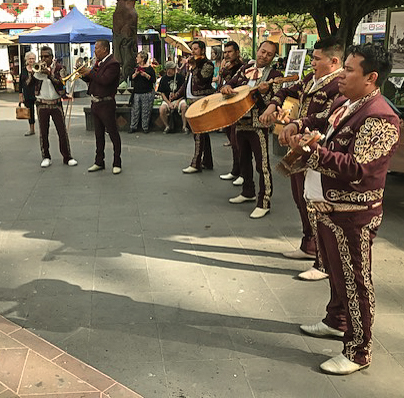
Strike up the band! We’re on our way to Ajijic.

UPDATE 5, last in a series!

Gotta give credit to James, the American Airlines agent who re-booked our cancelled trip to Costa Rica at no additional cost! We’re all set to fly from San Diego to San Jose on Tuesday, March 13, and get this show back on the road where it belongs.

Leslie has almost fully recovered from the ordeal that landed her in the hospital last month. Many thanks to the nurses and other staff at Sharp Urgent Care and Sharp Memorial Hospital, especially those in the Emergency Department and Acute Care 7-West. We deeply appreciate Dr. Watt, who runs a great ER; Dr. Ghafourian, the incredible hospital-based internist; and Dr. Bench, the skilled surgeon who removed Leslie’s gall bladder.

Our extended time in San Diego has been terrific because we’ve been with our daughter Stephanie for a little over a month. We’ve been to some excellent East Village restaurants and Stephanie has enjoyed quite a few home-cooked meals.

Leslie and I have also had time to talk about the rest of the journey. We plan to be tourists in Italy for a few weeks, then live in southern France for six weeks or so. But now we think there may be time to sneak in a few weeks in Portugal, which wasn’t on our initial list but sounds like it’s worth a look. The original plan was to return to the Chicago area in the summer to see family and friends, as well as several physicians, and decide where we will live from now on. That may still happen, but we’re also re-thinking Uruguay. We might just head down there in November and December to check it out, and push decision-making to January 2019. We’re nothing if not flexible!

Next post from Jacó, on Costa Rica’s Pacific coast.

IMG_2089
The downside to leaving is saying good-bye to Lewis (right) and Piper.

UPDATE

In the last post I said Leslie was tentatively scheduled for surgery on Saturday, Feb. 3. Didn’t happen. Her surgeon, Dr. Bench, didn’t like her test results, He preferred to wait until she recovered more fully from acute pancreatitis, which is what landed her in the hospital. And by the way, Dr. Bench was busy saving someone’s life in the ER for most of Saturday morning.

So Leslie was released from Sharp Memorial Hospital on Sunday, Feb. 4.  We’re bunking with our daughter Stephanie temporarily. Leslie’s gall bladder removal is now set for Tuesday afternoon, Feb. 13. If there’s no further delay, we should be able to resume our travels in early March.

Another update post-surgery…

IMG_0130
With Leslie out of the hospital, we were able to celebrate our 25th wedding anniversary Feb. 6 at Bluewater Boathouse Grill on Coronado Island. She looks great, doesn’t she? 


A small bump in the road, but a nice new home for us

CORRECTION: In the last post I said my paternal grandparents had eight children who lived to adulthood. It was seven. My sister corrected me. Thank you, Linda. I must’ve counted a favorite aunt twice!

We’ve had some issues this week, so it’s taken awhile to do a new post. Sorry about the delay. Leslie had been experiencing back pain that kept getting worse, and we both thought it was the extra-hard bed in Casa Walker, where we were living. A visit to an emergency room doctor confirmed that, so we found a new place. For the next three weeks, we are living in Casa San Antonio. We’re still in the same neighborhood and even a little closer to the Santiago mercado. The owners, a retired physician and his wife, are from San Antonio, Texas, where Leslie and I used to live. They are actually there right now! Smart. It’s only 75° F. in San Antonio today. Here, it’s 100° F. with a “feels like” of 107°!

So we had yet another encounter with medicine in Mexico, with a similar outcome to the one we had in San Miguel de Allende. The woman doctor spoke moderately fair English but Leslie understands a good bit of Spanish and there’s always Google Translate, so they had no trouble communicating. You probably know how much an ER visit costs in the States. Many hospitals in the U.S. want your insurance information before they even figure out whether you’re dying or not! At Clinica Mérida, they just asked if we were going to pay cash or with a credit card. Easy answer. We put all medical expenses on our USAA Federal Savings Bank card so we can more easily track medical expenditures for tax purposes. I think we were out of there in less than an hour with a diagnosis and prescriptions. Total bill: $340 pesos. That’s less than $20 USD. Even better, Leslie’s back is much better now.

Leslie and I have been attending church at St. Luke’s Anglican Mission. It’s a bit smaller than the Anglican churches we attended in San Miguel and Puerto Vallarta.

IMG_1629
St.Luke’s meets in the family chapel of a private home in Merida’s La Ermita area. On the first Sunday in June, they will move to new digs closer to us.

Last week there were six in worship. Yesterday, we had a total of eight. Father José, a native of the Azores (Spain) who has spent considerable time in Canada and the U.S., does a service in English at 10 a.m. and in Spanish at 11:15 a.m. The Spanish service is considerably larger. Even with a tiny congregation, this church does outreach work. On Saturday, Leslie joined a group (English- and Spanish-speakers) that meets weekly to make pulled pork sandwiches. Those sandwiches are distributed Sundays to poor people who tend to gather at one of the local hospitals.

IMG_1630
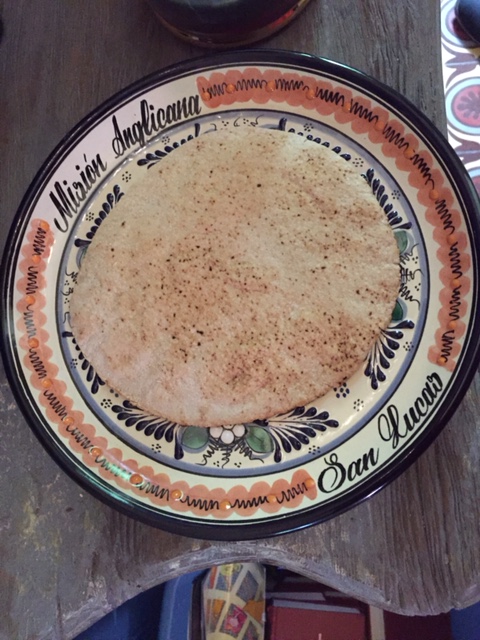
Father Jose uses a tortilla instead of bread for communion. Isn’t that appropriate?

Before getting sidetracked by the need to relocate, we went to the Gran Museo del Mundo Maya de Mérida, an impressive collection of Mayan culture and history. Much of the first section is devoted to how a meteor strike in the Yucatan Peninsula millions of years ago created cenotes that the Maya believed to be sacred. There was also a lot of recent Mayan history, including how the Spaniards brought Catholicism and how descendants of the Maya are contributing to Mexican society today. As we walked through, I thought, “This is not what I was expecting.” I started to think this place was a bust. Then we turned a corner, and there was a statue of Chaac Mool, the Mayan rain god. “OK,” I thought. “Here’s where the real stuff starts.” We saw works by pre-Colombian Mayan craftsmen and artisans, and enjoyed some excellent interactive exhibits. What’s really cool is that the majority of the signage in this impressive modern building is in Spanish, English and Mayan — Yucatec Mayan to be more specific.

Chilam Balam 2
 On the ceiling of the museum is a Mayan calendar (we think), a drawing from the Chilam Balam of Ixil, which a wall plaque describes as “an example of the persistence and power of Mayan memory.” Written in the 17th and 18th centuries, these books preserved important traditional knowledge in which indigenous Maya and early Spanish traditions coalesced. But they also contained material that is clearly pre-conquest.

Then we spent a day at the beach in nearby Progreso. Mérida is about 30 miles inland from the Gulf of Mexico. If you want to go to a beach, though, just wait along Calle 64 in the Centro and watch for a bus that says “Progreso Directo.” Flag that bus down (there’s one at least every 20 or 30 minutes), just like you would hail a taxi in downtown Chicago, and for $40 pesos (a little more than two dollars), two people can spend a day at the beach. Of course, it’s $40 pesos more to come back!

Not the greatest beach we’ve ever seen, but we appreciated the cooling breezes. There were lots of locals on the beach on a Monday, most with small children. It was fun to watch them playing in the gentle surf. Seaweed had washed up along the length of the beach, and that wasn’t very nice. But we remembered that, “A bad day at the beach is better than the best day at work.”

Some of the restaurants along Progreso’s malecon (boardwalk, or esplanade) have beach chairs with umbrellas and bar service. We found one of those and staked out a spot, ordering some bottles of water and a few drinks. But their lunch menu was not inspiring, so we found a restaurant just a few steps down the beach that gets high marks on Trip Advisor: Crabster. I had some fantastic shrimp tacos and Leslie enjoyed coconut-almond shrimp that was crunchy and very tasty. And we enjoyed the whole meal with our toes in the sand.

In the next post, I hope to provide some cost of living details. Here’s a teaser: We had lunch several days ago at our new favorite place in the Colonia Santiago. It’s called Maize, Canela y Cilantro — a very small, very cozy, breakfast and lunch place. We had soup, entree with small salad and rice, warm corn tortillas, black beans, amazing salsa, and four glasses of jamaica (hibiscus) tea. Total bill with a healthy tip was $270 pesos. That’s a big lunch for two for less than $15 USD.

IMG_1615
A closing shot. You see this all over Merida — people saving parking spaces, just like in Chicago when it snows. Except, there’s no snow here.