How does Puerta Vallarta stack up?

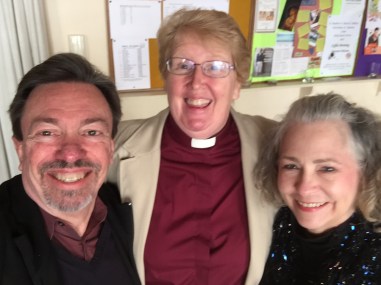
Before the main event (and because there are not a lot of pics this time), here’s a photo I thought I had posted before but realize now that I never put it up for all to see. John and Anne Mixen came to Puerto Vallarta for a well-deserved vacation just a few days after we arrived here on March 1.

Amigos-1445
We met John and Anne for drinks and watched an amazing sunset.

After a number of emails and texts, we met our old Naperville friends for drinks at the Lighthouse and dinner at Victor’s in the marina, followed by great conversation on the patio of our temporary home. It was great to see them again and catch up.

Now let’s talk pesos and dollars. Any consideration of where to live in retirement includes the cost of living. That’s a big factor in our decision, along with climate and a few other things. So let’s take a look at what it costs to live here in Puerto Vallarta.

We shop for food in several places, just like we did back in the States. The two major Mexican supermarkets are Soriana and Comercial Mexicana. Here’s a taste of what it costs to shop in an American-style supermercado (all numbers have been converted to U.S. measurement, and prices are in dollars at today’s exchange rate):

  • Lavazza coffee, 12 oz., $8.00
  • rice, 26.5 oz., $1.23
  • Colgate toothpaste, 4.6 oz., $2.04
  • oatmeal, 2.2 lbs, $1.07
  • gala apples, 23.8 oz., $.68
  • sliced deli ham, 17.6 oz., $5.39
  • olive oil, 25.4 oz., $5.28
  • gluten-free pasta, 12 oz., $2.61
  • loaf of 12-grain bread, $2.01
  • dozen eggs, $1.21

In San Miguel de Allende, and in Alicante, Spain, we shopped for fresh fruits and vegetabels at the mercado where the locals go. Puerto Vallarta is big city, so there isn’t one central market. We go to El Mercado Palmar de Aramara. It’s a neighborhood market, and we see lots of locals there. Here’s what we got this week:

  • pineapple (gold), $.69
  • carrots, 24.7 oz., $.48
  • red onion, $.59
  • raisins, 35.27 oz., $3.20
  • cauliflower, 35.27 oz., $1.09
  • white onions, 46.56 oz., $.45
  • cucumbers, 22.57 oz., $.93
  • Italian zucchini, 41.62 oz., $1.33
  • radishes, 35.27 oz., $.80

Obviously, we try to get fresh produce at the mercado whenever possible, but we have to take a bus or a taxi because it’s too far to walk. The bus is $15 pesos for both of us to ride. That’s less than a dollar US.

IMG_1484
Mexican buses are not much to look at, but they get us where we need to go. There are no routes, as such. You just look at the front window as the bus approaches. If you want to go to Centro, for example, hop on this one! And do you see the speed bump? Mexico LOVES speed bumps! They’re everywhere!

Taking a taxi is usually about $70 or $80 pesos, which is less than five dollars US. Transportation is not a big expense here in PV, but if we lived here permanently we would definitely need a car.

We usually have breakfast and lunch at home, as well as the evening meal most nights. Dinner out is always fun because there are a lot of excellent restaurants in PV, especially in the marina. We found a great place in the marina for seafood, Las Palomas Doradas. On our first visit, Leslie had mahi-mahi Veracruz style and I had — OK, I don’t remember what I had, but we both had a glass of wine and the bill was $38.25 US. On our second visit, we both had shrimp dinners with wine and paid less than $50 US. Plus, since it was a repeat visit, we got dessert free. There’s also a great Argentine restaurant, Rincon de Buenos Aires, where we both had steak with red wine and paid $57.85 US.

Is there expensive food too? Yes, we’ve had lunch twice at a gourmet burger spot, where Leslie had a glass of wine and I tried some Mexican craft beers. That ran us about $30 US, but the burgers are really good! And we have reservations next weekend at Puerto Vallarta’s top-rated restaurant (according to Trip Advisor), Tintoque, where we will celebrate daughter Stephanie’s birthday! That will be more on a par with high-end restaurants in the Chicago area. I’ll let you know.

There seems to be a lot of property on the market at any given time, which you would expect in a place like PV. There are also a lot of real estate agents, including some expats who prey on serve other expats. So I checked a reputable place, Coldwell Banker. Just so you know, CB on Main Street in Downers Grove has the best real estate agent in the Chicago suburbs, Slav Polinski. Slav, you should come down here! Anyway, the CB office in Marina Vallarta has a range of properties. These are some of the condos available (single-family homes are generally a bit higher):

  • A 1,200-square-foot, two-bedroom, two-bath in the Marina Golf complex for just $175,000. Overlooks the marina and the mountains.
  • A 1,732-square-foot, two-bedroom, two-bath in the Porto Fino complex for $395,000. It’s beachfront, on the seventh floor near the elevator, with views of the Bay of Banderas.
  • And just for comparison, a 4,000-square-foot, two-bedroom, three-bath penthouse in luxurious Bay View Grand for a mere $1.1 million. Two terraces, bars inside and outside, and a private pool. Here’s the listing, in case you want to dream a bit.

The Romantic Zone is another popular area of Puerto Vallarta. It’s in the centro, the older part of PV, and you can find homes with a little more Mexican character here. Just looking at the Coldwell Banker website, there are two-bedroom condos from $155,000 US up to $1.2 million US. For $599,000, you buy a two-bedroom, two-bath overlooking Los Muertos Beach, and it’s a penthouse with amazing ocean and beach views, plus a BBQ grill.

And that’s just from one agency, and just looking at their website. There are many other options. (Google “Puerto Vallarta real estate” if you’re interested.) Real estate here in PV is all over the map, literally and figuratively. For vacation rentals, the same thing. There are nice properties for rent under $1,000 US a month, and there are some ocean-front penthouses that rent for that same price, but per week!

In general, we think prices might be a little better in San Miguel or some of the other places we’ve visited. But we’re not done yet! At the end of April we head for the next destination, Mérida, capital of the state of Yucatan. More on that later.

Let’s close with a look at that sunset we enjoyed with our friends back in March. This is a regular occurrence here on Mexico’s Pacific coast.

PV Sunset-1455
Sunset as seen from El Faro, The Lighthouse in Marina Vallarta. We have a pretty good view from the patio of our condo, too!

Hasta luego!


Lake Chapala: Best climate in the world?

Leslie and I took one of our side trips this week to check out a place we’ve heard has “the best climate in the world.” It’s the Lake Chapala (chah-PAH-lah) area, about an hour south of Guadalajara. We were only there for a day and a half, but we’re going back because this area is now on our list.

We visited the town of Ajijic (ah-HEE-hick) to renew an acquaintance from over 20 years ago. Leslie and I knew Marlene Syverson when we all attended University United Methodist Church in San Antonio, Texas.


IMG_1499
Our old San Antonio friend Marlene at the Wednesday morning mercado in Ajijic. 

Marlene left Texas in 1994, but kept in touch through the years with Joan Ahrens, who was singles pastor at UUMC at the time (and a key force in getting Leslie and me together). Leslie read one of Joan’s Facebook posts recently, in which she said she had visited Marlene in Lake Chapala. Surprise!

So we spent five hours on a plush, first-class double-decker bus through the Sierra Madre Mountains to Guadalajara, Mexico’s second-largest city. We had primo seats at the front of the upper deck, with great views of lush valleys, extinct volcanos and huge fields of agave plants (main ingredient in tequila). A 45-minute taxi ride from the new Guadalajara bus station got us to Ajijic, a quaint little town similar in many ways to San Miguel de Allende.

IMG_1488
Make you hungry?  The climate means local farmers can grow crops year-round.

Marlene took us to the Wednesday mercado in Ajijic (some of the best produce we’ve seen, plus meats and fish!) and showed us several towns and neighborhoods, including Ajijic, Chapala, San Juan Cosala and San Antonio, where she has lived (yes, a little bit ironic) for a little over a year. Some are stunning, high-dollar homes with sweeping vistas, and some are quaint little Mexican houses with lots of character. We caught up with Marlene and learned more about her life in Mexico.

So what did we find? Lake Chapala itself is beautiful. It’s the largest lake in Mexico and is natural, not man-made. Small towns like Ajijic ring the lake, with gringos living mostly in Ajijic, Chapala and San Juan Cosala. We expected to find beaches and lots of boats, but there are no beaches and only the gringos paddle around in kayaks, Marlene being one of them.

IMG_1466
Lake Chapala. It’s really much bigger than it looks here. Marlene says there is a volcano on the other side of that prominent mountain. Some days, she can see smoke rising.

Best climate in the world? Well, International Living says the region has “one of the best.” This is due partly to “lake effect,” with Lake Chapala acting as a moderating force on highs and lows. And there are mountains north and south of the lake, helping ameliorate storms. Temperatures are in the 70s fairly consistently throughout the year, with the annual average between 75° and 78° F. Add in low humidity and a brief rainy season, and it’s hard to beat. That’s similar to what we found in San Miguel, but in SMA it can get pretty chilly at night — down into the low 40s — and the daytime temps can vary with the seasons. Also, Ajijic is at 5,000 feet altitude, a little over 1,000 feet lower than SMA. Closer to Denver-type altitude. The rainy season begins in mid-June, but most of the rain comes at night and is not constant. Long-time resident expats say it might rain every three days or so.

The cost of living here appears to be quite low.  Marlene left the mercado with a huge bag of vegetables that cost her the equivalent of $5 US. Leslie was lusting after the beautiful heads of red- and green-leaf lettuce, but we had no way to get it home!

I checked a couple of rental agencies in Ajijic and found some two-bedroom, two-bath homes and apartments available for under $1,000 US a month on a long-term rental. And some of them have views of the lake!

IMG_1468
Ajijic’s malecon. I can see myself jogging on this esplanade every morning!

If you don’t mind being outside the centro you can rent a nice home for $500 US per month or less. Houses for sale run the gamut, some are on the market now for $100,000 US or less. Marlene says property taxes can be as much as $100 US per year. That’s right – per year. Propane gas appears to be fairly costly but electricity is not, especially since you don’t need air conditioning.

There’s more, but I will revisit the Lake Chapala area in-depth in a later post. Much later. Leslie and I are thinking we will spend a couple of months in Ajijic next year, probably mid-January at least through the end of February, maybe longer. We want to be in Ajijic for the Festival de Febrero, a classical music festival formerly known as Northern Lights Music Festival.  We got to know two of the festival’s biggest backers, Canadian expats Tony and Roseann — their son produces the festival every year.

So it was a great visit with Marlene and an enlightening tour of the Lake Chapala area. We will be back.

But we still have one month here in Puerto Vallarta, and lots more to see and do. Next time, I hope to focus on the cost of living here.

Hasta luego!


A Whale of a Tale

I know it’s been too long since the last post. I do have several excellent excuses, but that will have to wait until the end because we had a great adventure this week.

Yesterday morning, Leslie and I got (relatively) up close and personal with some humpback whales, courtesy of Vallarta Adventures and expert guide Nikki from the U.K. Whale watching is one of Puerto Vallarta’s biggest winter tourist attractions. The humpbacks arrive in early December every year and by the end of March they migrate north again to their feeding grounds.

Northern Pacific humpback whales – we learned from marine biology Ph.D.candidate Nikki – come to Puerto Vallarta for the winter. Good choice. We did the same thing! Mexico and Hawaii are their two main winter breeding grounds.

IMG_1568
This is about as close as we got to the whales. Vallarta Adventures has a plane that searches for whales and let the Zodiac captain know where they are.

Our group of about 25 made the trip from the Puerto Vallarta maritime terminal to the mouth of the Bay of Banderas in a fast Zodiac (400 hp). On the way, I got a chance to see some boobies! Blue-footed boobies, that is. A kind of waterfowl. Since we were in the middle of the bay, we saw them in flight and couldn’t see their blue feet. Two of them flew right beside our Zodiac for at least a minute (see the brief video below), pacing us perfectly. Then they zoomed ahead and cut us off!

Error
This video doesn’t exist

But the main event was the humpbacks. We saw several groups of two or three whales in the Bay of Banderas and just outside the mouth of the bay in the Pacific Ocean. Nikki told us humpbacks rarely travel in groups. But we saw several groups of two or three, and it was amazing!

She was excited to see the whales feeding, since they normally don’t feed in the breeding grounds. They feed like crazy on their way to the Bay of Banderas, but they usually fast during mating season. Nikki spotted a krill floating in the water and was able to scoop it up for us to see. This is what whales eat – like a shrimp and a little smaller than a honeybee. Sorry I didn’t get a photo of the krill, but I will show you – in the series of three photos below – what it looks like when the whale dives. Once you see the tail go under the water, it will be awhile before Leviathan comes back up, gathering krill as it rises. Nikki said, “The biggest part of whale watching is whale waiting.”

IMG_1580

IMG_1581

IMG_1582
You can’t see markings on this fluke, but each whale has unique markings on the underside of its tail. Nikki said the markings are like human fingerprints. Researchers can identify each whale they see.

The highlight of the morning, though, was seeing a baby whale – a calf – with its mother. “Couldn’t be more than three months old,” Nikki said. Later she added, “We believe humpbacks may live 100 years or more. So we hope this newborn will migrate with its mother, and come back to these waters next winter. And we hope he or she keeps doing that even after all of us in this boat are gone.”

Baby humpback was breeching like crazy. “It’s very playful,” Nikki said. See the video below, and turn up the sound to hear Nikki’s commentary in English and Spanish.

Error
This video doesn’t exist

There was a third whale, a male, along with the mother-calf pair. But Nikki said we “should not assume that’s Daddy because that’s not how humpbacks live. That’s probably a male that wants to mate with this calf’s mother.” Humpbacks can be quite solitary, she said, noting that if we see two whales together they could be a male-female pair or more likely two males. She said researchers almost never see two females together during mating season.

If you’re ever in Puerto Vallarta, be sure to do your touristy-type stuff with Vallarta Adventures. They do a great job. The marketing people that sell for them, though, can be very aggressive. We’ve learned to say, “Vivimos aqui, amigo” (We live here, buddy. We ain’t tourists.) They leave us alone when they hear that.

Yes, it’s been awhile since the last post. I hope you think this was worth the wait. I did mention some excellent excuses.The biggest one is that the patio and small pool we have are actually magnets that attract us and keep us in place! See what you think!

Hasta luego!

IMG_1443
Wouldn’t you hang out here as much as possible? With an adult beverage in hand? Thought so.


And now for something completely different!

We have arrived in Puerto Vallarta, Mexico, and the difference between this city and San Miguel de Allende – where we lived for the past six weeks – is amazing. It’s bigger. More than 300,000 in the metropolitan area, with lots more traffic. It’s a beach town at sea level, with high temps and moderate-to-high humidities. Even more Americans and Canadians.

Leslie and I were able to rent a modern three-bedroom condo in Marina Vallarta that backs up to a golf course. We have a small pool in a huge outdoor space with lots of tables and chairs. We’ve already had one visitor (see photo below)! And we’re seeing (and hearing) a number of birds I can’t easily identify. A sparrow-sized cutie with a reddish-pink head and chest, a larger bird with yellow on its chest and a streak from its eye backward along its head, and a woodpecker. And what I think may have been a goldfinch – not sure.

iguana-1440
Saw this small iguana joining us on our first day in the sun! I didn’t have a snack to offer, so he left!

Hal, our Canadian landlord for the next two months, has a local administrator for his property. Rosanna picked us up at the airport on Wednesday and gave us some pointers on the marina area.

“It’s very safe here,” she said. “You can walk all around the area any time of day or night and you’ll be safe. Just one thing that you must never do: Never, ever, walk across the golf course at night.”

I was having a difficult time figuring out why. Would we be attacked by banditos lurking the links after hours? Bopped on the head by golf balls from blind golfers playing in the dark to avoid crowds? No and no.

“Crocodiles,” she said. “In the dark, you might step on one, and they don’t like it when you step on them.”

Right. What’s now a huge marina with lots of boats and tons of shops and restaurants, not to mention a plethora of condos, was once a swamp. There are still crocs here. It’s their habitat. So the danger is from wildlife, not from a wild life.

IMG_1442
In English: Danger. Crocodiles. No Swimming.

Rosanna has been very helpful. On Friday, she took us on a tour of Vallarta, showing us a bit of the old city and pointing out areas we will need to explore in depth over the next two months. She also took us to a local mercado for fresh fruits and vegetables, as well as seafood and meat.

There’s also a Wal-Mart and a Costco, in addition to Mexican grocery stores very much like the one we patronized in San Miguel. More on cost of living next time, but at first glance it appears prices are slightly higher here than in San Miguel.

We attended our first Vallarta ex-pats dinner on our second day in town. A number of them live here in the marina area, including Mike and Sara, the group leaders. There’s a social event almost every week.

We also attended Sunday morning services at Iglesia Cristo del Mar, or Christ Church by the Sea. But…it’s not really by the sea, more like on a really busy street close to the airport! I dressed as I would for any summer Sunday at Grace United Methodist Church in Naperville. Boy, was I overdressed! Shorts and t-shirts are not out of place here. It’s another outpost of the Anglican Church in Mexico, like the one we attended in SMA, and we enjoyed the service in what is essentially a big open-air palapa. Nice people. We will be back.

We’re really excited that John and Anne Mixen, friends from Grace UMC, are right here in Vallarta this week for a well-deserved vacation. We’re meeting them this evening to watch the sunset and enjoy dinner and conversation.

I’ll leave you with the view from our patio toward the golf course. We planned to do things today but we’re still on the patio because of a comment I made during lunch, “This is just about perfect, and you don’t often get perfect.” Maybe more often here in Vallarta. We’ll let you know.

Hasta luego!

IMG_1443
Looks great, doesn’t it? Behind these lounge chairs is a round table with four chairs where we’ve been having lunch almost every day. The only down side to this space is watching the golfers on what appears to be the 18th fairway. I don’t play golf, but know a lousy swing when I see one. Have to keep myself from yelling, “follow through, dude!” or “Hey, your stance is too wide!”


San Miguel is Number One. Just like the Chicago Cubs!

Back when I was working, my good friend and colleague John Peterson and I always made it through depressing pro football and basketball seasons in Chicago by saying, “How long until spring training?” (OK, the Blackhawks are winners, but neither of us understands hockey!) Well, spring training has begun anew. And this year, the Cubs are defending World Series Champions!!!

The Cubs are Number One, and apparently so is San Miguel de Allende.  No, we haven’t reached a final decision, but if we had to choose today our retirement home would be SMA. Will we be here  when the Cubs win the 2017 World Series? Can’t answer that one yet. We’ve still got several places to see.

We’re both a little surprised that we like Mexico so much. I always felt that our primary focus for a retirement home would be Europe, probably Spain, and it might still be that. So why is San Miguel the leading contender right now?

img_1358
The iconic Parroquia, the beautiful parish church that dominates SMA’s “skyline.” As the sun shifts during the day, the colors change. So it looks different in the afternoon than in the morning.

The climate here is just great — warm and dry. It’s been as low as 69º F. and as high as 81º F. for daily highs, with humidities usually below 50 percent. And there’s very little rain this time of year. In the six weeks we’ve lived here it has rained twice, both times at night and only briefly. Local expats tell us that during the “rainy season” it either rains at night or for an hour or two in the afternoon. All-day rain or thunderstorms — very rare. Yes, it gets cool at night, but it rarely gets into the 40s until the wee hours, like 4 or 5 a.m. We’re snug in bed then. And in the dead of summer, daytime highs are slightly higher but nothing excessive because we’re at 6,200 feet altitude. Those who have been here awhile say to expect highs in the mid to upper 80s and lows around 60º F. We can handle that!

San Miguel, as noted in earlier posts, has an extensive arts scene with concerts, plays, operas, ballets, films, lectures and tons of art galleries. Many restaurants have live music on the weekends. One of our friends at St. Paul’s Anglican Church — and a long-time expat — put it best when he said, “I try to limit cultural events to one per day.” St. Paul’s is yet another reason to choose SMA. Good group of people there, and we like the rector, a retired Episcopal bishop from the States. There are also a number of charities here with many opportunities to volunteer. So we could stay pretty busy if we lived here. Or not.

Another person from St. Paul’s told us she has a good friend in the real estate business and can help us find a long-term rental. Lots of people come down here for six to nine months and rent their homes when they’re not here.

img_1371
This is a boveda ceiling in one of SMA’s many churches. Lots of buildings have this unique brick work ceiling. It’s even in some homes. Go here to see a two-minute video showing how they do it.

Then there’s the food. We love the fresh local produce we get at the mercados, and the meat we get at the carnicieras. But SMA also has a ton of great restaurants, from hole-in-the-wall chicken joints with locals lined up out the door, to high-end places with top-flight international chefs and stunning views. One could never go hungry in San Miguel.

International Living magazine touts Mexico as 2017’s top retirement country. Last year, I think, it was Panama. There are a lot of positives about San Miguel, and about Mexico in general:

  • Mexico boasts one of the strongest economies in the western hemisphere right now.
  • It’s close to the U.S., so we can get back relatively quickly and without great expense in case there’s a family emergency.
  • Health care here is excellent, as we noted with Leslie’s visit to the podiatrist. And we have friends who always see a dentist while they’re here to get crowns and root canals — just as good as in Chicago at one-third the cost, they say.
  • There are many creature comforts in Mexico, like theaters, shopping centers, good cell phone and internet coverage. In the cities, even the small ones, there’s nothing third-world about this country.
  • The cost of living in general is low, especially if you pay in pesos. Friday morning we met another couple at a popular breakfast spot and had a lovely meal for a little over $500 pesos — about $25 USD. For FOUR people.
  • There are a lot of other expats here, mostly from the U.S. and Canada, but some from the U.K. and other countries.

OK, what are the downsides:

  • There are a lot of other expats here, mostly from the U.S. and Canada, but some from the U.K. and other countries. No, that’s not a mistake. Too many gringos is a problem. It tends to drive prices, especially home prices, higher.
  •  We will need to learn more Spanish. We’re getting by OK with limited knowledge, but if we’re going to live here we need better command. And we would have to do that if we chose Spain, too.
  • We’ll have to adjust to time here, and how things are done. This is Mexico, things don’t always go as smoothly and perfectly as in the States. Even though they don’t do siesta here in San Miguel, mañana is a way of life. You have to be patient sometimes.

    img_1365
    Traffic can be a problem in SMA, but drivers are much more courteous here than in the U.S.

So we have a lot to think about. But now it’s on to the beach town of Puerto Vallarta on Mexico’s Pacific coast. We have already connected with the expat community there, and we’ve signed up for a dinner on Thursday night after we arrive Wednesday afternoon. This group has lots of social events like dinners and happy hours — every week!

The condo we’ve rented from a Canadian guy named Hal is very different from all the places we’ve lived in on this trip. It’s a modern townhouse in a gated community called Marina Vallarta. It’s on a fairly busy street, but it backs up to a golf course. We have three bedrooms and a huge outdoor area with a plunge pool. It’s nowhere close to the historic centro. We will be able to walk to the marina area and to the beach, but we’re unsure about how to access the local produce in farmers markets, as were able to do in Spain and to a lesser extent in Malta. Hal says taxis and buses are plentiful and cheap. We’ll be in Vallarta for two months — all of March and April.

Next post from Puerto Vallarta!

44552eb3-10e9-4c99-b0f2-1fa8eec84026
Go Cubbies!


Guanajuato. Wow!

img_1408
The colors are even more amazing in person!

This is the colonial city of Guanajuato (gwan-ah-WHAT-oh), about a 90-minute drive from San Miguel de Allende. It was founded in 1548 as a silver mining town, and is now the capital of the state of Guanajuato (SMA is part of the state of Guanajuato). It was named as a UNESCO World Heritage Site in 1988. We were here a few days ago and were just blown away by the beauty of the place. The buildings are even more colorful than in SMA.

img_1413
Just had to take another selfie!

We see the yellow and orange and rust colors — like on the church just to the right of the top of Leslie’s head — on buildings in SMA, but look at the blue and pink! You may even be able to see some green. Most of that is paint, of course, but many of the buildings and sidewalks in Guanajuato were built with local sandstone, which can have pink or green hues, depending on the copper content.

The Spaniards discovered silver here in the 1500s. There were several silver mines, at least one of which is still in operation. There were also some gold mines, but silver has been this city’s claim to fame for hundreds of years. Freddy, our excellent driver and guide, told us that about two-thirds of the world’s silver comes from right here in this pretty little town.

Guanajuato played a major role in the 1810 Mexican War of Independence. In fact, Freddy started us out on the overlook where I took the above photos. There is a huge monument on the hillside to a poor miner, Juan José de los Reyes Martínez, better known as El Pípila.

img_1424
Monument to El Pipila from the lower part of the city.

When the revolution began, the Spanish elite and loyalist soldiers fled and locked themselves in the granary, an enormous building with few windows. From this veritable fortress they were able to pick off the insurgents when they attacked. El Pípila strapped a large flat stone to his back for protection and crawled to the wooden doors of the granary’s main entrance. He then smeared the doors with tar and set them on fire. Once the doors burned, the insurgents were able to take the building. The first battle of Mexico’s struggle for independence from Spain was a victory for the insurgentes. 

The granary is also where government forces later displayed the severed heads of the revolution’s four top leaders, including Ignacio Allende (he’s the “Allende” in San Miguel de Allende), one on each corner of the building. The structure is scheduled to become a museum soon.

Freddy showed us the San Cayetano Church, which is outside the central city near the Valenciana mine. The mine’s owner, Antonio de Obregón y Alcocer,

img_1417
A painting in this church shows Jesus with a white dove flying near His feet. No matter where you stand in the church, the dove appears to be looking directly at you.

spent  years in a fruitless search for silver, and prayed for God’s help in his effort. When his mine became one of the most successful in the world, he built this church (between 1765 and 1788) and dedicated it to Saint Cajetan. When his daughter got married, he had workers install a temporary sidewalk of silver bars. She walked on silver for several hundred feet, from the street into the church for her wedding. Inside there is amazing amount of gold on the altarpieces, as well as some enormous 19th century paintings.

The big white building behind Leslie (in the photo above) is a former convent, now the University of Guanajuato. We also saw the house where famed Mexican artist Diego Rivera was born. He lived in Guanajuato as a child, then his family moved to Mexico City. Some of his works are displayed on the second floor, but to see the good stuff you have to go to Mexico City museums.

The central city is in a valley, with parts of the town going straight up the hillsides. There are two streets on the upper level and two on the lower level. A funicular goes up and down one hillside, but the main way to get around is little alleyways called callejónes. Some are quite narrow.

img_1431
These up-and-down alleyways reminded us of Malta!

The most famous of these alleyways is the Callejón del Besos, or “Kissing Alley.” It’s only 66 inches wide in places, with balconies that nearly touch each other. Folklore states that couples who kiss on the third step are guaranteed seven years of happiness together. We spent quite a bit of time in a local silver shop (yes, Leslie has a couple of nice new silver trinkets) across from the San Cayetano church, so we didn’t have time to see this callejón. Guess we have to go back.

Most of the streets in the central part of the city are underground. Being in a narrow valley, Guanajuato was prone to disastrous flooding for many years. So a series of tunnels was built in the 18th century to protect the town.

img_1427
Some of the tunnels are wide enough for two-way traffic, and include sidewalks.

In the 1960s, a new dam permanently fixed the flooding issue. The tunnels were then widened and turned into streets. Much of the central city traffic — including foot traffic — is in these old tunnels. It’s fascinating.

Freddy told us that the alleyways are also the site of a university tradition. In the evenings, university students gather in the Plaza de la Paz and go through the alleyways playing guitars and singing, with people following them along the way. It sounded quite festive, so we will have to go back and spend a few evenings there to experience this tradition.

There’s a lot more I could say about Guanajuato, but this was just a day trip. It’s probably not a place we would want to live, especially if we have to go up and down stairs very much. Leslie and I are more focused on San Miguel de Allende, and we’re leaving soon. In the next post I’ll reveal how we’re feeling about this neat little colonial town we have called home for almost six weeks.

Hasta luego!

Not so frequently asked questions

Some of you have been asking questions about our journey to a new home “somewhere in the world.” So a few answers first, then more about this amazing part of Mexico where we’re living for the next two weeks.

What if you need a doctor?  Health care in Mexico is very good and very affordable. Last week, Leslie went to see a podiatrist for a minor toe irritation. (We walk a lot here, so foot health is important.) She called and got an appointment the same day. She liked the doctor, who spoke English fairly well. He fixed her up with no problems. Fee: $200 pesos — that’s not even 10 bucks. He gave her a cream to use for the next week or so, and that cost another $200 pesos. No need for insurance. She just paid cash.

How do you get your mail? We use a great mail forwarding service, U.S. Global Mail in Houston. It’s a physical address, not a P.O. box — sort of like we have an apartment in Houston. They email me when we get mail, and I can look at a picture of the envelope and decide whether I want them to open it and scan the contents, forward it to me or throw it away. Most of it gets thrown away, just like if we were at home. But while we were in Spain, we got a $500 refund check. U.S. Global Mail offered several options for delivery, some of which were less than $20 USD. I chose an option through DHL that provided a tracking number, and that cost us about $40 to have it sent. DHL got that check to me in two days. I can’t say enough about U.S. Global Mail. If you plan to travel for an extended period, go to their website and sign up. Just click on the link above for information.

If you have more questions, send me an email or comment through the blog.

We did some exploring this week — went to a place called Cañada de la Virgen, about 30 minutes outside San Miguel. This is an archaeological site that wasn’t discovered util 1998.

img_1501
The pyramid seen from the inner courtyard.

Excavation began in 2002, and the site was opened to the public in 2011. We were very fortunate to have Roxana as our guide. She is an archeologist who worked on the early excavations, and actually did her Ph.D. dissertation on Cañada de la Virgen. It was incredible to have a guide with so much knowledge of the site. Her passion for the site, and for mesoamerican culture, came through clearly.


She said the main pyramid and other structures were probably built by the Otomi people sometime in the sixth century, and were likely abandoned by the 11th century.  She explained astronomical aspects of the pyramid, how the pyramid is aligned with the solstices.

img_1499
Archeologist Roxana explains the ancient structure.

She also explained how people would approach the holy site on a pilgrimage. The architect actually built the road leading to the pyramid first, and you can still see it today.


Three things were needed to have a holy site: a mountain, a cave and water. Roxana said the pyramid is the mountain. Ask the local people, even today, about a pyramid and they won’t understand what you mean. To them, it is a mountain. This mountain is smaller than the better-known pyramid in Chicen Itza, but it has the same very narrow steps. Roxana showed us how the ancient people probably walked up those steps, and we tried her method. Leslie and I are quite proud that we walked up and down the set of steps leading to the inner courtyard, and all the way up to the top of the pyramid!

img_1500
We didn’t walk straight up, we went at an angle with one foot crossing over the other. That’s Roxana leading the way while the rest of us try to figure it out.


6306a604-dda8-4214-a83f-87dbaecca6df
View from the top of the pyramid to the inner courtyard. You can see the ancient pathway that led from the distant river valley to the temple.

Yesterday, we treated ourselves to a dip in the mineral waters at La Gruta, just outside SMA. We spent a few hours there, starting out in a big pool of warm water. Then we moved to the second pool, which is even warmer. From that pool, you go through a tunnel into the hottest pool, which is like a hot tub without the jets. There’s a dome over this area so it’s a grotto — La Gruta. We spent a few hours lolling around in the warm baths on a day that wasn’t quite so warm. It only got up to about 70º F.


Following advice from several people, we got there in the morning to beat the crowds. But on a Thursday when the weather was cool, there weren’t many other people there. We got out of the pool and changed, then had lunch at their restaurant. We both had some excellent enchiladas verde and a margarita. But the highlight of lunch was a visit from a friendly cat who prowled the grounds like he owned the place.

ce311203-6098-49e6-b1c3-54696243e6e5
This guy knows a comfortable lap when he sees one.

He got a small treat and wandered away to visit another table, but he came back when we were done and almost immediately jumped into Leslie’s lap and made himself at home. Made us both think about our Sam, whom we know is being well cared for by our friend Barbara Hoch in Naperville.


That’s all for now. Hasta luego!


Sunny San Miguel

Leslie and I have arrived in San Miguel de Allende, about three hours north of Mexico City. This UNESCO World Heritage Site is about 6,200 feet above sea level and has a population of about 140,000 — perhaps 10,000 of whom are expats from the U.S., Canada, Australia, Ireland and the U.K.

We plan to be here through the end of February. And it’s warm! Today (Sunday) the high will be about 75º F. Cool at night, but really pleasant during the day. Low humidity, and no rain for the next week at least.

img_1428
The neo-gothic La Parroquia San Miguel de Allende Arcangel is the parish church and the city’s emblem. It is one of the most photographed churches in Mexico. 

Getting here certainly wasn’t easy, and we made it more complicated by trying to save a few bucks on the airfare. First, we flew from Malta to Barcelona and stayed overnight to avoid getting up early and rushing around trying to make close connections. Good move.

From Barcelona, we endured an 11-hour flight to Bogota, Colombia, then another four hours to Mexico City. On the trans-Atlantic leg, we were on an Avianca Airlines Boeing 787 Dreamliner. First time on one of those. Neat plane, and an uneventful trip, but in hindsight it would have been better to spend a little more and go through Miami to Mexico City. You get what you pay for.

We arrived in Mexico City at about 2:30 a.m. Wednesday and stayed over Wednesday night to become acclimated to this hemisphere. Got to SMA Thursday afternoon and settled into our apartment in the Centro area, which has cobblestone streets and narrow sidewalks with neat little shops and restaurants all along the street. We are just above Cafe Monet, owned and run by our landlady’s brother. Click on the link to see their site, then click on “Casa Monet Apartments” to see where we’re living for the next six weeks.

We’ve already visited the Central Mercado for some fruits and vegetables, and on Saturday we went to the Organic Fair just down the street. Judging from the quality of the produce, we’ll be going back there every Saturday. Especially since there are also food vendors selling all manner of tacos, enchiladas, empanadas and other Mexican food for lunch.

img_1340
One of the food vendors at the Organic Market. Looking forward to proxima semana (next week)!

San Miguel has a vibrant arts scene, with tons of art galleries and almost-daily opportunities to see plays and attend concerts of all types. In fact, there’s a jazz festival Feb. 7-11.

Today we attended St. Paul’s Anglican Church, just a 10-minute walk down the main street. Neat old building and a good message from a retired Episcopal bishop — also a U.S. expat.

More next time on costs, but the big thing in that area is the peso-dollar exchange rate. The dollar is getting stronger by the day, and that helps in many ways. For example, in the Mexico City Airport Hilton I tipped a bellman 100 pesos — that’s about five bucks USD. And yesterday, we went to a chain supermarket here in SMA known locally as “Mega” for all the stuff we couldn’t get at the mercado. Put over 1,200 pesos on my debit card! Checked the bank account online today, and with the exchange rate USAA Bank gives us, we paid $57.18 for a basket full of food. Leslie is sure that at Jewell or Whole Paycheck it might have been double or even triple that amount.

As they say around here, hasta luego!


Ciao, Malta!

So we bid farewell to the island nation of Malta. (The Maltese say “ciao” for goodbye. Their language borrows heavily from Italian as well as Arabic.) Lacking any temporary-residence visas, we can only stay in the Schengen Zone for 90 days. Tomorrow is the 90th day since we boarded a train in London and headed for Spain.

So we’re headed back to the New World to check out more possible retirement homes. First stop, later this week, is San Miguel de Allende in the mountains of Mexico’s Guanajuato province, about a three-hour drive north of Mexico City. It’s over 6,000 feet above sea level. Since we’ve been living for the past month at about six feet above sea level, this will take some getting used to!

We’re excited about being warm again. Malta is in the Mediterranean Sea, just about as far south as you can get and still be in Europe. But this winter has been unusually cold. It’s been that way all over Europe. The mountain air of San Miguel promises to be drier. While at night it’s in the low 40s F. right now, daytime temperatures are in the mid 70s. Can’t wait to have a margarita on the rooftop terrace of our apartment!

Right now, the plan is to be in San Miguel until March 1, then move on to Puerto Vallarta on the Pacific coast. Both towns have huge expat populations. Puerto Vallarta’s expat community is active and vibrant. We’ve already gotten a ton of emails inviting us to their social events. After about six weeks in PV, we plan to try Mèrida, at the northern tip of the Yucatan Peninsula, then possibly Playa del Carmen, just south of Cancun. We’re back in the Chicago area, probably by mid-July. Hope to see many of you then.

International Living magazine rates Mexico as the Number One retirement destination in the world for 2017. It’s partly the warm climate, partly the warm people. We’re hearing lots of great things about Mexico. Now, I know somebody is saying, “Gee, isn’t Mexico dangerous?” Well, it’s not nearly as dangerous as Chicago!  Seriously, there are places in Mexico you should not go, like the Mexican states along the U.S. border and the state of Sinaloa. The drug cartels aren’t active in the areas we plan to visit. If they were, the tourists and expats would leave, taking their money with them. Then lots of good folks would lose their jobs. Where we’re going, it’s very safe. More on that later.

I leave you with a photo I took in Teatro Manoel in Valletta. It’s the third oldest theater in Europe, and the oldest in the former British Commonwealth. The concert we attended was titled, “Gallic Music for Cello and Piano.” The cellist was a young French artist, Sébastien Hurtaud. He was accompanied by Italian pianist Bruno Canino. We heard works by DeBussy, Fauré and Saint-Saëns. Leslie and I both enjoyed the performance, but spent the whole time thinking of our dear friend and outstanding cellist, Jo-Jo Murphy.

Next post from Mexico!

img_1333
Sorry, it’s a little dark at intermission of a concert we attended in the very small Teatro Manoel, built in 1731 by the Portuguese Grand Master Antonio Manoel de Vilhena of the Knights of St. John. 


Malta: Maybe, Maybe Not

We have fewer than 10 days left here on Malta, so it’s time to start evaluating. There are a lot of good things to say about Malta. The biggest plus so far has been the ease of meeting other expats. We’ve enjoyed going to church at St.Andrews

img_1316
Here we are with the Rev. Kim Hurst, pastor of St. Andrews and a methodist minister from the U.K.

and have met some lovely people. In fact, Leslie and I had dinner last night at the home of our Canadian friends, Frank and Judy Wilmot.

Another plus is that most Maltese speak English, some better than others. Most signage is in English or a mix of English and Maltese. It’s generally pretty easy to make ourselves understood.

Culture is a big deal here — yet another plus. In fact, Malta will be the European Union Capital of Culture in 2018. They’re already promoting it. Beginning next week is the Valletta International Baroque Festival, a series of 25 classical concerts at various places around the capital city. We may get to see two or three before we leave. Malta also has an annual jazz festival and many opportunities to see theater and dance performances.

Leslie and I attended the President’s New Year Concert by the Malta Philharmonic Orchestra on New Year’s Eve at the Mediterranean Conference Center, which was built in the 16th Century by the Knights of St. John as a hospital. The orchestra was pretty good, as was the featured soloist, a young Maltese soprano, Nicola Said; the program mostly light classics and show tunes. And the president was there!

fullsizerender
The blond woman with glasses in the center of the photo is President Marie Louise Coleiro Preca. We were that close to her. Everybody talks about her with genuine affection and respect. What a concept!

We were in the same room with the president of Malta, and we never saw any security. No metal detectors, no cops or soldiers with guns. Granted, the real political power here rests in the prime minister rather than the president. But she is far from a figurehead, being heavily involved in social issues of all kinds. I think it speaks well for this island nation that the president can mingle easily with the people.

There are also some things that aren’t that great. We noticed pretty quickly that it gets quite chilly here in December and January — and many Maltese don’t have heating or air conditioning in their homes. We have a dehumidifier in this 400-year-old house, which makes it feel more comfortable. Today’s high was only 50º F. with light rain and even some sleet, and tonight’s forecast low is 41º F. Up until today, it’s been more like 60º to 65º F. most days. Our neighbor came by this morning and said this is the coldest winter she can remember. Newer construction and renovated spaces often include heat and air conditioning, but running them costs quite a bit — electricity is expensive on Malta.

That’s just one part of what we’ve determined to be a slighter higher cost of living than what we found in Spain. Renting or buying property would be more expensive here. The biggest real estate agency lists apartments in Valletta for upwards of $315,000, and some of the better properties are well over $1 million. Here, on the older more historic side of The Grand Harbour, an area known locally as The Three Cities, some apartments are listed for under $160,000, and about the same in other parts of the island.

Surprisingly, we found some rentals available in St. Angelo Mansions, built recently just outside the walls of Fort St. Angelo — the only Malta fortification that withstood The Great Siege of 1565. We could rent a three-bedroom with water view there for anywhere from $1,100 to $1,600 a month. And in Valletta, we found rental listings for as little as $1350 a month for a two-bedroom. In communities nearer the center of the island, we found monthly rentals as low as $600 a month, also for two bedrooms. So there is some affordable real estate all over Malta.

Then there’s the cost of food. Just a few items from last week’s grocery list, all converted from grams and liters into U.S. measurements, and from euros to dollars at the current exchange rate. Bear in mind that without a car we don’t have easy access to an American-style supermarket. Our neighbor Marthese, who takes care of this house for the owner, took Leslie to the supermarket one day a few weeks ago, but most of our food comes from The Convenience Store (yes, that’s the name — it’s a local chain). With that in mind, here are the costs for you to compare:

  • peanut butter, 12.3 ounces, $2.88.
  • eggs, one dozen, $2.31.
  • orange juice, 67.6 ounces, $3.56.
  • olive oil, 8.4 ounces, $3.35.
  • coffee, 17.6 ounces, $3.03.

Leslie says the cost of fresh fruits and vegetables from the greengrocer on Victory Street is slightly more than we paid at Central Mercado in Alicante. Same with meat and poultry. So in general, food costs are slightly higher here. Eating out in a restaurant is also a bit more expensive than in Alicante, with dinner menu prices rivaling what we paid at our favorite restaurants in DuPage County.

In general, we both believe Malta deserves continued consideration as a retirement home. We may come back to see how it is in a warmer season.

Our time in Europe is over for now. Next stop, Mexico. More on that next post.

I leave you with a photo of the nave and elaborately painted barrel vault of St. John’s Co-Cathderal, the number one tourist attraction in Valletta, built by the Order of St. John between 1572 and 1577, and dedicated to St. John the Baptist. In the 17th Century, the interior was redecorated in the Baroque style by Italian artist Mattia Preti and others. The church is considered one of the finest examples of high Baroque architecture in Europe and one of the world’s great cathedrals. The artwork alone is awesome.img_1318